
I’m writing halfway through our trip to South America, just as we leave Quito, Ecuador, for a visit to the jungle—we actually will reach our hotel by a 20-minute canoe ride! Yesterday I stood on the equator, with one foot in the northern hemisphere and one foot in the southern. It’s winter here, though, and Quito lies at an altitude of 8,000 feet, so the temperature has been fine.
For some years now I have corresponded with a surgeon who works at a mission hospital located near the site of a tragedy in 1956. Then, Huaroni Indians (called Aucas at the time) killed five young missionaries who were trying to make contact with a tribe noted for their violent ways. Elisabeth Elliot lost her husband Jim, and her subsequent writings, such as Through Gates of Splendor, as well as widespread coverage of the event in Life magazine made the killings famous. The recent film End of the Spear revisits that time.
It seems violence is everywhere. When we get fragments of news from the US, we hear about the ongoing debate on whether to bomb Syria as punishment for their use of chemical weapons. Here in Ecuador we see street demonstrations with hammer-and-sickle flags and banners proclaiming “Long Live Maoism.” And we arrived here from the nation of Colombia, which has been fighting guerrilla wars for 60 years, at the cost of 200,000 lives.
As so often happens, the church flourishes in the midst of tragedy. Where missionaries died, a hospital now tends the sick and wounded. And where war has raged, people turn to the church for hope and comfort.
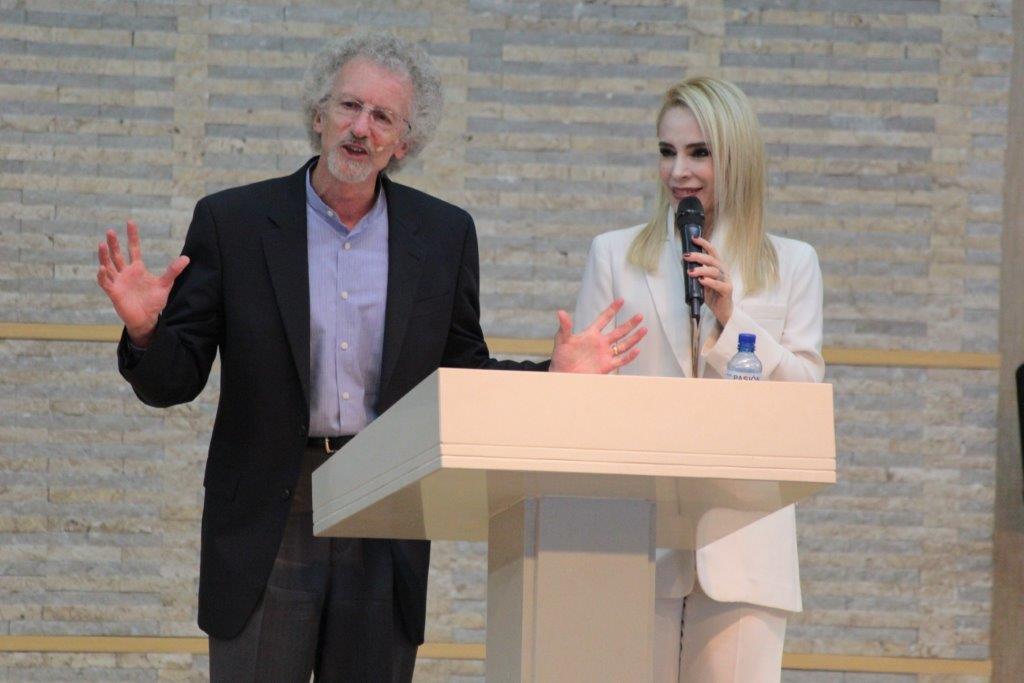
I wish every American could experience the church where I spoke last Sunday in Bogota. Casa Sobre la Roca (House Upon the Rock) has four services, with the first scheduled at 6:30 am. Only 3000 turned out for that one; the other three had standing-room only crowds of 3500. Most attenders are first-generation Christians, exuberant about their faith. They sing lustily and break into applause—or tears—throughout the sermon. The church was founded by a newspaperman/politician who got on the wrong side of a former President and had to flee to Miami. As conditions changed, he returned to found Casa Roca, which now has 27 branches in various cities.
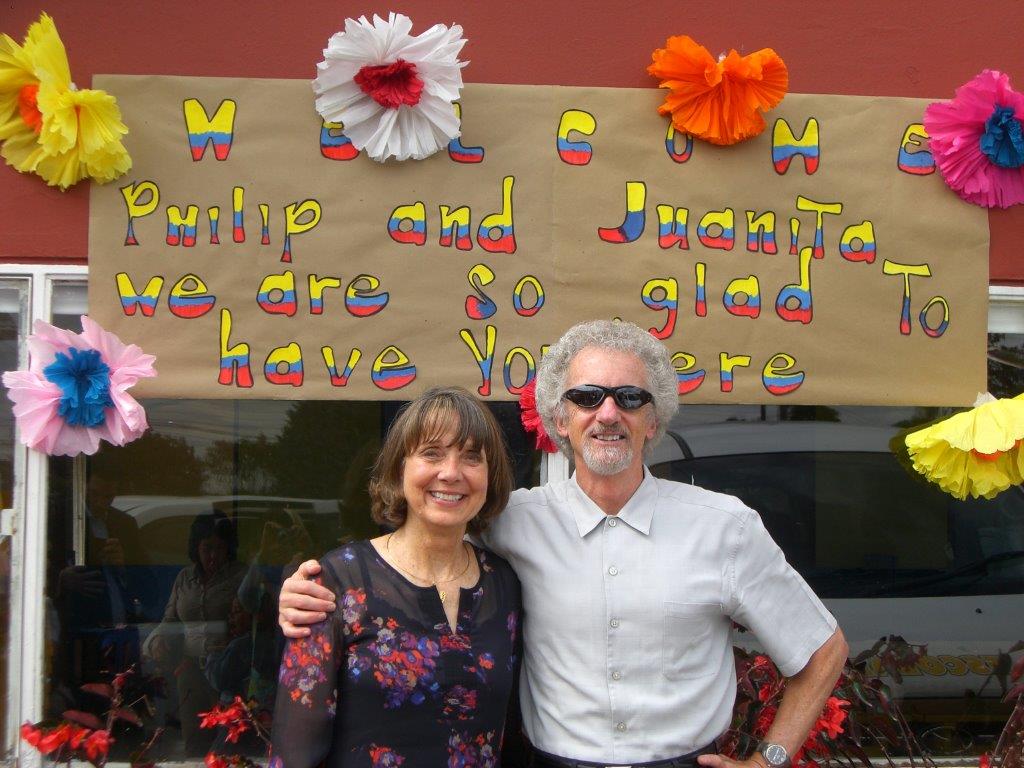
We got the full Latin treatment. The church hosted us like royalty, with flowers, signs, and gifts awaiting us at every turn. We heard moving stories from people who had been held hostage by guerrillas for several years, and from those who had lost loved ones. Yet we also met high government officials and leaders from both sides of the conflict, who have now reconciled, as well as former narcotics dealers and drug addicts, all of whom are celebrating their new life as followers of Jesus. One of the government’s top administrators is married to a former guerrilla chief, both now active in the church.
Hope is in the air in Colombia, and peace talks are taking place, yet the danger continues. Wherever we went, two bodyguards accompanied us. The hotel gave dire warnings about not walking outside, not trusting any taxi, not assuming that a uniformed policeman isn’t a fake. Traffic was terrible because farmers had rioted the day we arrived and the government deployed 50,000 troops and closed many roads, funneling them all into major arteries, which got completely clogged. After a while you get used to the sight of tanks and machine guns lining the roads.

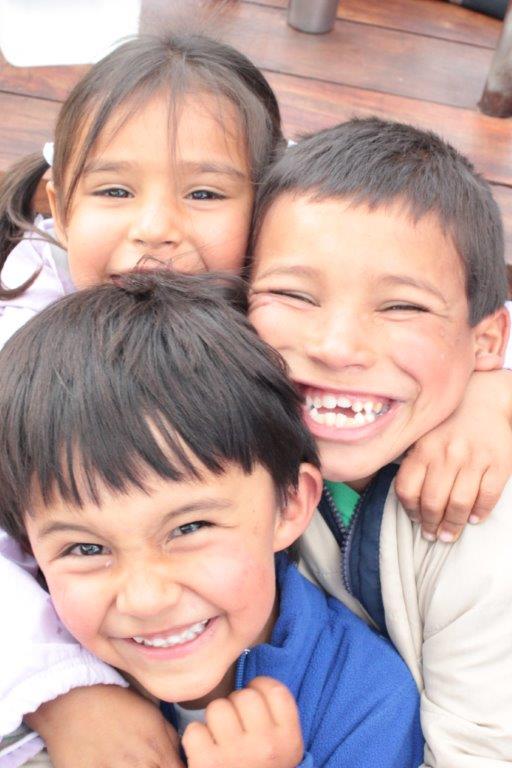
A healthy church doesn’t just sit around singing songs and listening to praise music; it puts faith into action. Casa Sobre la Roca gives 15 percent of all its income to outside ministry programs, focusing especially on twelve orphanages. Most abortions are illegal in Colombia, which means many unwanted children are born. Some are sold into a kind of sexual slavery, others turned loose on the street to fend for themselves. The church takes in these children, houses them with loving “parents,” and gives them first-class treatment, including education in private schools. The kids surrounded us, touch-needy, holding our hands and hugging our legs. (They also insisted on touching my Afro-style hair, which is unlike anything they’ve seen among Colombians!)
Often I’ve said that my own faith gets fueled by trips to other countries, and this one is a good example. There are many good churches in the US, I know. There are also many where the aging congregation simply goes through the motions. Not here. The kingdom of God is alive and well. As Jesus said, it starts as a small seed, then grows into a great bush in which the birds of the air come to nest. Parts of South America are in the springtime of faith, and the region’s birds are finding a place to rest.


Greetings Philip,
You requested my book, “The Greater Jesus” last year. Here’s my latest . . .
As J. Dwight Pentecost rightly lamented . . .
“There has been little attempt to synthesize the whole field of prophecy . . . and there is a great need for a synthetic study and presentation of Biblical prophecy” (Things to Come, viii).
That synthesis has now arrived—”Unraveling the End: A balanced scholarly synthesis of four competing and conflicting end-time views.”
To my knowledge, this new book presents the first comprehensive effort “to synthesize the whole field of prophecy.” It is based on my doctoral dissertation and 13-week church seminar series. The four views are (in order of their prominence in evangelical circles today): dispensational premillennialism, amillennialism, postmillennialism, and preterist.
For a PDF Review Copy: Just email me back and request your copy.
[… links removed …]
Blessings,
John Noe, Ph.D.
Author of “Unraveling the End:
A balanced scholarly synthesis of four competing and conflicting end-time views”
The trafficking in humans, including children, is unfortunately not limited to Colombia – a fair amount of it goes on throughout South America. On the other hand, it was good to read of some of the cases of reconciliation that you witnessed in Casa Sobre la Roca. Much more is still needed as Colombia continues to struggle with issues of narcotics, kidnapping, violent crime, and the FARC – there is a never ending plea for more grace in our world.
Dear Philip,
Thank you for sharing and presenting the good news that the church is still alive and well. That God is still in control. I have always been a fan of your books and your writings have inspired me to start writing myself.
I live in Indonesia where church persecutions is pretty rampant although it probably isn’t as bad as how it happened in some other countries where such attacks happened daily. Extreme religious groups do however, from time to time staged an attack on a church. It is during such harrowing circumstances though, that God’s miracle took place. I have met a pastor who survived such attacks. He shared how the extremists have begun throwing rocks, destroying cars and motorcycles and lighting up fires as well as moving in to find and kill the pastor. God, in His grace, used the fire that was meant to destroy as a means to protect the pastor. The smoke caused by the fire blocked the view of the extremists while they were climbing the stairs of the church buildings and even though they were just meters away from the pastor, they were unable to see him and the people that were with him. That event reminded him of how God used the pillar of fire and pillar of cloud to guide the Israelites to safety and then, God was using that same pillar to guide him and his staffs. He was able to use that opportunity to escape to safety. Today, he still ministers strongly, bringing news of peace and love to the community. God IS still in control and always will be.
God bless you!