
I’m so sick of hearing about this year’s election that I decided to write some of my own thoughts on the subject. I’ve just finished reading two excellent books that caution Christians about trusting too much in politics: A Public Faith, by Miroslav Volf, and To Change the World, by James Davison Hunter. Even more alarming, unChristian by David Kinnaman and Gabe Lyons details the overall effect of Christians’ courtship with politics: as recently as 1996, 85 percent of “outsiders” who claim no religious belief had a favorable impression of Christianity whereas now only 16 percent of young outsiders have a favorable impression of Christianity and only 3 percent have a good impression of evangelicals.
 So how do Christians living in a diverse society respond to moral issues? Do we focus on our personal morality and leave the public morality to secular politicians? Or can we perform some civic role that helps guide the broader culture and do so in a constructive, not off-putting way? Rather than propose a single path, I will instead make a series of observations and suggestions for Christians to consider as we interact with a world that does not necessarily share our views.
1) Clashes between Christ and culture are unavoidable. John Howard Yoder records 51 separate times in which Jesus himself confronted injustices, and throughout history his followers have followed suit. Early Christians were instrumental in ending cruel Roman practices like gladiator games and infanticide, and ever since, Christians have led moral campaigns against abuses such as slavery. Even minority groups like the Anabaptists who seem isolationist must engage with culture—their pacifism, for example, stands as a powerful moral judgment on society.
Christians must always discern which injustices merit a fight, but a pietistic withdrawal is bad for both church and state. Nazi Germany posed the severest test to Luther’s doctrine of two kingdoms, a test which the church mostly failed. Practicing an individualistic faith,  with no strong tradition of opposing the state, German church leaders waited far too late to protest. Indeed, many Protestant leaders initially welcomed the Nazis as an alternative to communism and Christians adopted a motto which now seems incomprehensible: “The Swastika on our breasts, the Cross in our hearts.”
Eventually a minority did wake up to the threat. Martin Niemöller published a series of sermons with the in-your-face title Christus ist mein Führer (“Christ [not Hitler] is my Führer”). He spent seven years in a concentration camp; Dietrich Bonhoeffer was  executed in another. Hermann Maas, who is counted as among the The Righteous of the Nations by Yad Vashem, spent the last year of the war in a forced labor camp. In the end, faithful Christians were the only significant group to oppose Hitler within Germany. Trade unions, Parliament, politicians, doctors, scientists, university professors, lawyers—all these capitulated. Only Christians who understood their loyalty to a higher power resisted. Their courageous stand attracted the world’s attention: from 1933 to 1937, the New York Times ran nearly a thousand news accounts on the German church struggle.
When the war ended, the eastern part of Germany found itself under a different kind of totalitarian rule, the beginning of four decades of Soviet domination. A few years ago I interviewed a pastor in Saxony who recounted personal stories of the difficulties that Christians faced under communism. His children had limited educational opportunities, and he had to work as a plumber to supplement his meager pastor’s salary. “After the wall came down…” (a phrase I often heard), everything changed. Although less than 20 percent of Saxony’s citizens now belong to a church, he estimates that 70 percent of those in parliament are active, practicing Christians. Having lived under Nazism and then communism, Christians quickly stepped into a cultural vacuum to help the newly free society lay a foundation for morality and legal structure. They knew all too well what can happen when Christians are excluded from the public square.
As that pastor has since learned, effecting change in a democracy is messy, tedious work, a challenge far different from surviving totalitarianism. To bring about a moral consensus in a democracy requires cunning, persuasion, and compromise. Stephen Monsma, a Christian who served in the Michigan state legislature, has written of the painstaking struggles to get drunk-driving legislation—an issue that invites a clear moral consensus—passed in his state. He likened his original vision of doing good to sitting by a cozy fire in his living room choosing luscious vegetables and beautiful flowers from a seed catalog; the actual work, he said, more resembled the gardener’s chores of digging, pulling weeds, and fighting off insects.
Moral issues tend to present themselves in absolute terms of right vs. wrong, yet by its very nature democratic politics depends on bargaining and compromise. While he was in office, Surgeon General Koop attracted heated opposition from conservatives who had an all-or-nothing approach to morality and opposed any compromise on abortion. Koop, who 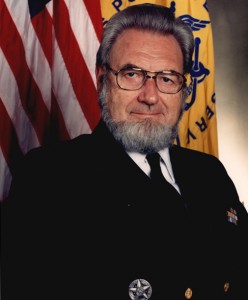 shared their iron-clad belief that all abortion is wrong, came to conclude, “One of the problems with the pro-life movement is that they are 100-percenters. Historically it is true that if the pro-life movement had sat down in, say, 1970 or 1972 with the pro-choice people, we might have ended up with an agreement on abortion for the life of the mother, defective child, rape and incest, and nothing more. That would have saved ninety-seven percent of the abortions since then.” Only after losing the absolute battle did the pro-life movement shift tactics to restrict abortion funding, require parental consent, and limit late-term abortions; since then hundreds of such laws have passed in state legislatures.
Democracy requires us to recognize others’ rights even when we fundamentally disagree with them. It requires a civility in which I respect a person’s ultimate worth, and seek to persuade but not to coerce. For this reason modern democracy grew out of Christian soil. We must exercise the skill of ethical surgeons in deciding which moral principles apply to society at large.
2) Christians should choose their battles wisely. Peter Berger has written of the “world maintaining” and “world shaking” functions of religion. Founders of the United States recognized that a democracy, with less imposed order and more freedom, needs a religious foundation to guide and motivate its citizens. In John Adams’ words, “We have no government armed in power capable of contending with human passions unbridled by morality and religion…. Our constitution was made only for a moral and religious people. It is wholly inadequate for the government of any other.” The nation’s leaders counted on the church for this world-maintaining function, to teach and equip citizens to be good.
When the church moves into the world-shaking business, though, it needs to do so wisely and with care. Alas, Christians involved in politics have tended historically to go off on tangents. In the 1840s and 1850s a major campaign with the odd name “Know-Nothing movement” demonized Catholics and raised hysterical fears about them. Historian Mark Noll has written about a Philadelphia fracas in 1844 sparked when a Catholic bishop requested that Catholic schools be allowed to read from their own version of the Bible rather than the King James Version; rioters burned several Catholic churches and killed more than a dozen people. As late as 1960 the National Association of Evangelicals urged all evangelical clergy to proclaim the dangers of a Catholic president on Reformation Day, just before the election.
 The landmark moral campaign by churches was Prohibition, which absorbed more sheer energy from evangelicals than any other political effort. To their credit, the leaders understood well how democracy works and how to attain a public consensus. Prohibition succeeded because of a relentless campaign of education, skilled organization, and effective lobbying. Its advocates persuaded the general public that drinking had dire costs in terms of health, life expectancy, poverty, family breakdown, inefficient workers, and social decay. Early feminists joined the campaign, broadening its base. A Prohibition party actually ran candidates for President, and in two decades the United States went from having five dry states to passing a constitutional amendment for the entire nation; 46 of 48 states ratified the amendment.
For five years the nation mostly complied with the new law. Then drinking slowly began to rise again, accompanied this time by mob activity, political corruption, and crime. The legislation was too severe, and it alienated other religious groups such as Jews and Catholics. In the final analysis, judges historian Paul Johnson, “what looked at first like the greatest victory for American evangelicalism turned instead into its greatest defeat.” The failure of this moral crusade drove Protestants out of the political area, and not until the late twentieth century would they return in large numbers.
The more we focus on tangential issues, the less effective we will be in addressing matters of true moral significance. I hear very little from evangelicals about the impact of gun proliferation on violent crime, much less an issue like nuclear disarmament. I hear almost nothing about health care for the poor and protecting widows and orphans, both biblical mandates, and scant mention of the thirteen million children who die worldwide from malnutrition in a year. I hear talk about family values, but when an administration proposed legislation to allow mothers to take unpaid leave after childbirth, conservative religious groups opposed it.
Too often the agenda of conservative religious groups matches line for line the agenda of conservative politics and does not base its priorities on the Bible. Much of society’s alarm about conservative Christians getting involved in politics now traces back to tangential campaigns and a loud silence about important issues.
(More to come)


A huge fan of Phillip’s books..just discovered this blog and SO happy to hear reasonable Christian viewpoints on this subject..especially the items that are Biblical mandates…health care, poverty, concern and aid for the NON-aborted child. If we saw and heard leaders on the right saying we must work together to fix these issues, that is is what we MUST do as followers of Christ…..what a tremendous witness this would be to non-believers. To really love our neighbor as our self. To BE the good Samaritan (could there be a more clear mandate than that?) and work for health care for all?
Christians were the only ones to stand up to the Nazis? Really?What about Jews??
Election night and I’m surfing the net trying to find ONE evangelical leader who has not endorsed Romney (and since Donald Miller no longer talks about politics, I have returned to my all time favorite Christian voice: Yancey) – and I tell you, it ain’t easy. What’s going to happen in a few hours time, when Obama has won and all those pulpits will have to fight back their tears – tears that a man who does not even pray to the same God has not won!
It is a mystery to me how our Evangelical brothers are crucifying a man who cares for the poor (see his personal history, post-Harvard), wants to provide health-care for those who can’t afford it, obviously has a loving relationship to his wife (not his husband) – and works tirelessly to improve the welfare of our nation. Plus – I’m pretty sure he prays to the God of the Bible…
The Evangelical stance is making me sick – yet again!!!
(Thank you Mr. Yancey, you have given me hope during entirely hopeless times – and I am not referring to this election… cause my main man O will wrap this up in the next few hours!)
With all due respect, when has a ‘measure’ of our christian faith been our ‘likeability in the culture we live in??? Jesus didn’t exactly have a high approval rating among the religious leaders nor the Roman rulers when you say the church is the conscience of the state, you are exactly right, but that doesn’t mean that Christians have to remain in their churches as bunkers instead of actively engaging the culture and government on issues of morality..And just for the record, America is not nor has it ever been a ‘democracy’..which leads to anarchy . Rather we were established as a ‘constitutional Republic, and therefore the men we elect are to represent those who elected them..But when our christian values conflict directly with the law, we are told in scripture ‘obey God rather than man’..Having said that, in the future, if Christians don’t exercise their God given responsibility to VOTE , then we are commanded to obey those we elect, but that never precludes us from working to change bad moral laws or court deisions ( like getting Supreme Court Justices who are of the mindset that the Constitution is not a ‘living’ document and should be interpreted based upon ‘original’ intent…And when it comes to abortion, that means using every means legally acceptable to see that the American Holocaust , which has cost America over 60 Million unborn lives, to be relegated to the scrap heap of history..In my opinion, even according to Francis Schaffer, there is a no more noble cause than the sanctity of human life…