

When I discuss my recent memoir, Where the Light Fell, often I use the phrase toxic church to describe the extreme form of Southern fundamentalism I grew up under. I joke that I’ve been “in recovery,” a process of detoxing, ever since.
“Tell me,” asked one podcast interviewer, “What makes a church toxic?” Three characteristics immediately came to mind.
FEAR. Memories of church from my youth summon up feelings of fear and shame. It was hard to hear the gospel as good news when most sermons centered on sin and hell. Over the decades, churches have played on many fears: a Catholic president (JFK), Armageddon, communism, the Great Tribulation, Y2K, AIDS, secular humanism, homosexuals, socialism, the New World Order, COVID-19. Some of these fears have proved legitimate, but others border on conspiracy theories.
“Perfect love drives out fear,” says 1 John 4:18. A healthy church does not use scare tactics to manipulate emotions. Nor does it deny that we will face frightening situations. Rather, it directs fearful people toward a trustworthy God. The Psalms and the Prophets demonstrate the pattern clearly: again and again, a people facing catastrophe are reminded of a God who is not anxious. “Be still and know that I am God,” Psalm 46 advises, even when nations are in uproar and mountains are quaking.
 Yes, we should battle injustice and respond to tragedy, but from a position of calm compassion. The world is still reeling from a pandemic that has affected nearly everyone on the planet. I have talked to pastors who describe congregations torn apart by anger and fear over vaccines and masks. Is this the best we can do in representing the One whom the apostle Paul describes as “the God of all comfort, the Father of compassion”?

EXCLUSION. My boyhood church in Atlanta stationed deacons at the door to turn away as “troublemakers” any people of color who tried to attend. Thank God, our society has moved beyond that kind of overt, legalized racism—and yet bias persists in other forms.
The apostle Paul, once a Pharisee who would not deign to touch a Gentile, slave, or woman, laid down this firm principle after his conversion: “There is neither Jew nor Gentile, neither slave nor free, nor is there male and female, for you are all one in Christ Jesus.” In one fell swoop, he dismantled the walls separating race, class, and gender. Nonetheless, the church has never stopped struggling with these very issues.

“If you want to grow in love, the way to do it is not likely going to be by attending more Bible studies or prayer meetings; it will happen by getting close to people who are not like you,” writes the Canadian pastor Lee Beach. Grace gets tested when we find ourselves confronted with people who are different from us. Do we welcome them? I think of the people attracted to—and received by—Jesus: “heretics” (Samaritan women), foreigners (a Roman officer), outcasts (prostitutes, tax collectors, the disabled, those with leprosy).
 I know of no churches who would actively exclude someone of a different race or social class, but I know many churches that just “happen” to comprise people of the same class, race, and political persuasion. What kind of welcome would a homeless person or immigrant receive in such a congregation? Perhaps in reaction to my racist upbringing, now when I walk into a new church, the more its members resemble each other, and resemble me, the more uncomfortable I feel.
RIGIDITY. Church rigidity can take many forms. In extreme cases, an authoritarian pastor can create a near-cultic atmosphere. A series of popular podcasts produced by Christianity Today traces the rise and fall of Mars Hill Church in Seattle, which Mark Driscoll led to explosive growth, only to see it implode under his abusive style. A psychologist friend of mine who has studied pastors estimates that 80 percent of them have strong narcissistic tendencies. Why not? We elevate them, literally, on platforms, and assign them the lofty task of telling us what to believe and how to behave.
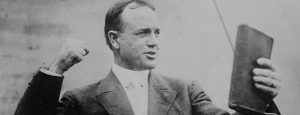 All too often, narcissistic leaders focus on minor points of doctrine and miss the main message, of God’s boundless love for estranged human beings. John’s gospel describes Jesus as “full of grace and truth.” Rigid churches tilt heavily toward the “truth” side of that balance scale, often piling on rules of behavior that the Bible never mentions.
Once again, the apostle Paul shows a more flexible style. “It is for freedom that Christ has set us free,” he declared to the Galatians, vehemently opposing those who insisted that Jesus-followers undergo the Jewish practice of circumcision. Yet he voluntarily took a strict ritual vow (Acts 18, 21) in order to identify with Jewish believers. Similarly, depending on the spiritual maturity of the church he was addressing, he modified his counsel on such issues as pagan holidays and eating meat that had been offered to idols.
Paul summarized his approach: “I have become all things to all people so that by all possible means I might save some.” He knew which theological and ethical issues to emphasize and which ones to minimize. Rigidity over minor disagreements, he viewed as a serious threat to church unity. The existence of some 54,000 denominations in the world indicates that not everyone has followed Paul’s style.
A Healthy Church…
 In the last full night with his disciples, Jesus set out a formula for healthy church leadership (John 13-17). First, he got up from the meal and washed their feet, much to their discomfort. He demonstrated that good leaders don’t cling to privilege narcissistically. Quite the opposite: they serve the very ones they lead.
Next, Jesus gave a paramount command that overcomes exclusion: “By this everyone will know that you are my disciples, if you love one another.”
Finally, he prayed for unity—not only for the disciples but for everyone in history who would follow him. Nothing would bear a more powerful witness to his message. In his prayer, Jesus said, “Then the world will know that you sent me and have loved them even as you have loved me.”
Service, love, unity—Jesus named these as primary marks of his followers. Have you ever asked a stranger, “When I say the word Christian or evangelical, what’s the first thing that comes to mind?” I have, and not once, not once, have I heard anyone answer with one of those three words.

A few times I have visited a megachurch in a tiered auditorium. As I look at the spotlighted stage below, I feel as if I’m at an NBA game, with 10,000 spectators cheering ten professionals on the court. It strikes me, that’s the opposite of a biblical view of church. Worshipers gather together not as spectators to be entertained, but as active participants. While toxins work their way into the church seemingly without effort, a healthy church will require the vigilance of all its members.
Meanwhile, the real audience sits outside, waiting to see if we truly represent Jesus through our acts of service, love, and unity.

Subscribe to Philip Yancey’s blog here:


Try “The Pandora Problem: Facing Narcissism in Leaders & Ourselves” by James Wilder
I didn’t name the Bible College because it is an entirely different place now than when I was there, a transition time between presidents. Since some of my comments were negative, I left it unnamed. No, my wife and I have no children, “unless you count your books,” Janet says
David
There are a lot of felons in the USA since we put more in prison than all the other countries combined.
Try remind your self that Jesus and the apostles were incarcerated and made felons, some even got the death penalty, Jesus being one.
To help overcome is to do good and use your being a felon to council and study with other felons that are thinking as you are. Start a bible class for released felons in your home town. A lot of places will volunteer the space if you just ask.
Attend or start a class in a jail or prison nearby, the welcome will surprise you.
Spreading the word will relieve your stress more than anything and you will sure be looked up to instead of down!
Dear Philip,
I have just finished reading your memoir. Thank you for your honesty in sharing what must have hurt you deeply.
I read your memoir with these thoughts :
1. its very scary to me how well intentioned faith in God can lead to “man-contrived” selfs-binding vows or committments that were never God’s intentions to begin with. Marshall and you lived under the weight of a mother’s vow your entire lives, and one that was beyond her prerogative to invoke ..
2. as i grow older as a Christian, indeed the phrase ” what is real and what is fake ” is so true. My first Church was an Evangelical Free Church that emphasized the Pulpit preaching ministry, and I was exposed later to the more “supernatural” ministry – deliverance, healing, prophecy etc ministry. What i saw on Youtube, prohecies claiming the victory of Trump and seeing the disconnections and inconsistencies in his life, leave me wondering the same question, which of these claims or prophecies are truly from the Lord ?
3. your sharing about how nature, music, romantic love .. the “gifts” from the Lord softens you and leads you back to Grace and God is so comforting. How many well intentioned Churches , Christians attempt to get the world out of Christians end up pushing us away from Church / God ? Despite the cynical writtings in the Book of Eccleciastes, the message that impresses upon me is that God wants us to enjoy the gifts of life, the wonders of His world, the simple pleasures of life ( food, friends, family ) and not the deny yourself every good gifts from God, grit your teeth through life, bleak existence of living
4. your attempts to be the bridge of reconciliation between your Mom and Marshall moved me. As much as we want to see our loved ones reconcile and forgive one another in love, we have to realize that its their own self-will and choices they make and have to live with till their deaths and be accountable before God one day. I think this applies also to the choices that our kids make with their own lives, as much as we want to steer them in certain directions, they have their own choices to make. I pray that your Mom and Marshall will somehow be reconciled before their leaving this world in regrets one day
5. how sad that even in Christian homes or churches, there are so much unforgiveness and self-righeousness that blinds us .. your sentence “ i have to flee this place .. righteous evil unleashed in the name of God “ so aptly describes so many so called God led churches / Christians .. something that I pray we will be kept away from
6. having been exposed to deliverance ministry and the consequences of generational curses .. the threat of you Mother’s prayer over Marshall is indeed chilling. The curses or blessings of people in authority over us does indeed have powers over us, and it is a warning for us to be careful of the “curses” that we may invoke over our children, especially those that are spoken in anger
Thank you Phillip, for all your wonderful books and encouragement that they bring to so many millions across the world. You may not be a missionary fulfilling your Mother’s vow, but your books have influenced and bless many, i am sure your Dad and Heavenly Father is smiling over you and your body of works.
These are such wise and affirming words, Surjadi. I thank you for them, and for the careful reading that prompted them. I told a story; you identified the strands behind the story. And even since I turned in my final draft, there has been some movement toward reconciliation in my family.