
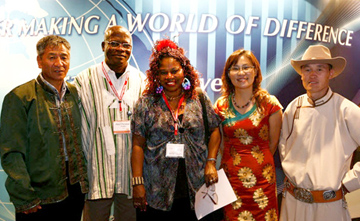
 I’ve just returned from a conference in Toronto which gathered 900 representatives from 130 countries. They are among the most compassionate and dedicated people I have met, yet few people know about them because they operate out of the limelight, behind bars. They work or volunteer for Prison Fellowship International, an organization headed by an unassuming Canadian named Ron Nikkel.
My friendship with Ron goes back more than thirty years, when he headed an organization called Youth Guidance that worked with juvenile delinquents (euphemistically called “non-school-oriented youth,” as if there exists a category of school-oriented youth). As a journalist I accompanied Ron on what turned out to be one of my most fascinating assignments. Chuck Colson’s new organization Prison Fellowship had handpicked two dozen federal prisoners and Ron had selected an equal number of non-school-oriented delinquents to undergo a rigorous Outward Bound-type program in northern Wisconsin.
For the kids, the program achieved its goals spectacularly. Street-wise hooligans learned to cooperate with teammates to master orienteering in the wilderness, for any mistake brought down the wrath of the whole group. “I know some of you will want to run away,” said the leader as the two-week course began. “Just remember, the woods are full of bears and wolves, so you likely won’t last long.” I’ll never forget one bully, seething with anger, who kicked every tree he passed on the first day’s hike. When it came his turn to rappel off a cliff he got a bad case of sewing-machine leg and blubbered like a baby. Yet at the end, when he completed a half-marathon run through the forest, you would have thought he’d won the Olympics. He had learned a new set of skills and the maturity to look inside himself for strength, rather than exploiting the weakness of others.
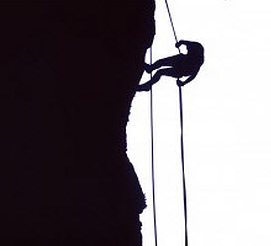
The federal prisoners, however, had a very different experience. Anticipating a retreat away from prison, with lazy days of lounging by a lake and fishing, they encountered instead a boot camp of pre-dawn marches and physical ordeals. The leaders of the adventure program knew every motivational trick in the book, but if a man who stands six-foot-eight and weighs three hundred pounds doesn’t want to edge backwards off a cliff, even if he’s fastened securely to ropes, nothing in a leader’s manual can make him do it—especially if the balker is a convicted murderer. The prescribed course ends with a three-day “solo” in which each participant finds a spot in the wilderness and spends the time alone with a Bible and notebook. Organizers had not factored in that solitary confinement represents the worst kind of punishment for a prisoner. For the juveniles, everything worked as planned; for the prisoners, nothing worked as planned.
Ron Nikkel moved from working with youth to working with adult prisoners in 1982, joining a loose association of six countries with prison ministries. Under his leadership Prison Fellowship International has spread to 124 countries, making it the largest such organization in the field of criminal justice. Several times over the years I have accompanied Ron on trips overseas. We visited prisons in Chile at the height of General Pinochet’s oppression. We visited a medieval dungeon still housing prisoners outside Moscow just as the Iron Curtain fell—the only prison under Soviet communism which had a dedicated chapel, built by the prisoners. Even now, when I go to a new country in Africa or Asia, often I’ll ask Ron for contacts and meet the Prison Fellowship staff.
Thanks to its founder Chuck Colson, Prison Fellowship has a high profile in the United States. Overseas, programs may deliberately keep a low profile, for oppressive governments don’t like outsiders messing with their prisoners. Working under the radar, PFI has devised a remarkable series of creative approaches. Some African nations do not supply food for their prisoners, requiring the prisoners’ families to care for them instead. In a shame-based culture, though, families may shun their convict relative, and so PFI runs bakeries and soup kitchens to supply food. In women’s prisons, young children often go behind bars with their mothers, and PFI volunteers provide schooling and day-care for these children. PFI runs educational programs for prisoners and brings in teams of doctors and dentists to provide medical care. In Brazil, PFI has taken complete control of six prisons at the government’s request. Other PFI chapters focus on aftercare, even building factories to provide jobs for ex-offenders.
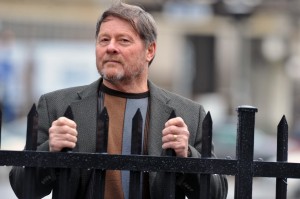 Ron Nikkel has probably visited more prisons in more countries than anyone in history, observing firsthand conditions that sometimes rival those of Nazi concentration camps. He has headed a United Nations task force on criminal justice. He likes to quote Winston Churchill, who said you can judge a civilization by how it treats its prisoners. By that measure, he says with a sad shake of the head, we all fail. Scandinavian countries probably show the most humane treatment, but no one has an answer for crime and nearly every society faces a discouraging recidivism rate of 70 percent. For this reason PFI is allowed to operate even in tightly controlled Muslim countries: No one else can help, so why not give the Christians a chance.
Publications from PFI feature stories of reconciliation between victim and offender, including PFI’s leading role in restorative justice after the Rwandan massacres. Ron does what he does because—despite (or due to) his criminal justice background—he sees no solution to crime other than transformed lives. For this reason, all the good work done by prison volunteers comes in the name of Christ, the one who offers transformation. PFI works across all denominational lines, bringing together charismatics, mainline Protestants, evangelicals, Orthodox, and Catholics.
Why do they do it, these volunteers? Most with whom I talked in Toronto insist they do it because Jesus commanded it. Announcing his mission, he included the goal to “liberate the captives,” and he said in Matthew 25 that God will judge the nations on how we cared for “the least of these,” including prisoners.
The great Russian novelist Fyodor Dostoevsky credited his conversion to a woman who thrust a New Testament in his hands as he traveled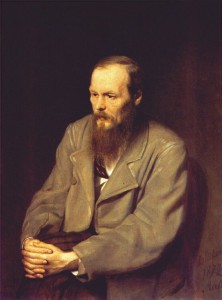 by train to Siberia. She, a volunteer not unlike those I met in Toronto, showed compassion to one man whom society was sending into exile, and because of her kindness one of the greatest novelists met a life-transforming power.
Although the work of Prison Fellowship International may take place out of the limelight, its impact is incalculable. In many countries today’s prisoners comprise tomorrow’s leaders; for example, after South Africa’s change from white rule a majority of the new cabinet had a prison record, as did their leader Nelson Mandela. Nearly every liberation movement starts with prisoners (think Aung San Suu Kyi of Burma). And, looking through history, imagine the Christian faith without prisoners: John the Baptist, Jesus, Peter, Paul, John Bunyan, martyrs in the Roman Empire, Dietrich Bonhoeffer, Alexander Solzhenitsyn, Anna Skripnikova, Nelson Mandela, Benigno Aquino, Armando Valladares of Cuba. In Toronto I saw that a movement begun in chains and behind bars has not forgotten its heritage.


it’s the kind of stuff that gives you goosebumps – that someone has decided to not forget about prisoners, someone has decided to not write them off as either too far gone or not worth ministering to. Beautiful story, thanks Philip.
New to your writings. I just read “The Jesus I Never Knew”.. liked your style and your insight so I went our and bought 6 more of your books. I’m confident I will enjoy them just as much. My problem is I want to read them all at once. I thank God for his gift to those who can put on paper their research and experiences in a way we reap the benifit of their hard labor. Thank You doesn’t quite say enough, but somehow THANK YOU is all I can say. I don’t think the Holy Spirit quit inspiring writings with the disciples. You certainly are on a list that includes our friend C.S. Lewis. Again THANKS.
I am grateful for every one of your books. You and C.S.Lewis have been my most influential authors. Thank you,too, for posting here so we addicts have something of yours to read between books.
For about four years I led a monthly service at our local ‘Young Offender Centre’. It never failed to amaze me how appreciative some of the kids were that we bothered to come and spend time with them. Pretty well every month at least five or six kids came up to us afterwards to shake our hands and thank us for taking the time to come in and be with them.
‘I mention this story because the emotions I felt when my mother showed me the crumpled photo were the very same emotions I felt one February night in a college dorm room when I first believed in a God of love. Someone is there, I realized. Someone is watching life as it unfolds on this planet. More, Someone is there who loves me. It was a startling feeling of wild hope, a feeling so new and overwhelming that it seemed fully worth risking my life on.’ (Disappointment With God)
‘Deprived of my own father in infancy, I received as an adult from Brand much that I missed. As much as anyone, he has helped set my course in outlook, spirit and ideals. I look at the natural world, and environmental issues, largely through his eyes. From him I also have gained assurance that the Christian life I had heard in theory can actually work in practice.’ (Pg. 64, Soul Survivor)
Mr. Yancey, I want to thank you that your honesty in writings makes me realize and keep learning that I can’t save myself and I need His grace. I wrote those two paragraphs in case you wander from your faith.
“My Father’s house has many rooms; if that were not so, would I have told you that I am going there to prepare a place for you?” – John 14:2 NIV