

I have been working on an update and revision of two books I wrote with Dr. Paul Brand, a world-renowned leprosy expert who died in 2003. Dr. Brand influenced me more than any other person, and we spent most of a decade collaborating on writing projects. Last week I came across this memory from his life:
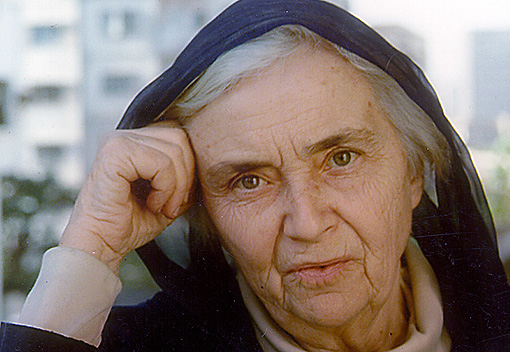 In the 1950s I visited a nun, Dr. Ruth Pfau, outside of Karachi, Pakistan, amid the worst human squalor I have ever encountered. As the taxi neared her place, a putrid smell burned my nostrils, a smell you could almost lean on. Soon I saw an immense garbage dump by the sea, the city’s accumulated refuse that had been stagnating and rotting for many months. The air was humming with flies. At last I could make out human figures—people covered with sores—crawling over the mounds of garbage. They had leprosy, and more than a hundred of them, banished from Karachi, had set up home in this dump. Sheets of corrugated iron gave them a bit of shelter, and a single dripping tap in the center of the dump provided their only source of water.
There, beside this awful place, I found a neat wooden clinic in which I found Dr. Pfau. She proudly showed me her orderly shelves and files of meticulous records on each patient in the dump. The stark contrast between the horrible scene outside and the oasis of love and concern inside her tidy clinic seared deep into my mind. Dr. Pfau was daily exhibiting these properties: beauty, sensitivity to needs, compassion, and the steady, fearless application of divine love through human touch. All over the world people like her are fulfilling Christ’s command to fill the earth with God’s presence.
My curiosity piqued, I searched the internet to learn more about Dr. Pfau, and pieced together her remarkable story from such diverse sources as The New York Times, Al Jazeera, the BBC, Pakistani newspapers, and Christianity Today. In a time when terrorist acts make the headlines, and Muslim-Christian relations are strained, this nun’s extraordinary career in the Islamic Republic of Pakistan deserves our attention.
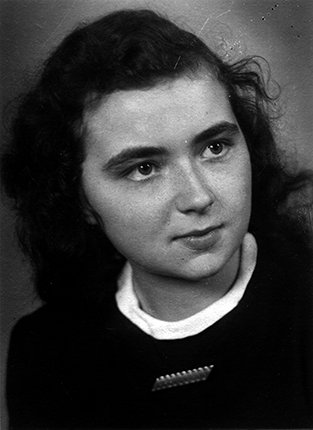 Ruth Katherina Martha Pfau was born in Leipzig, Germany, in 1929, just as the stock market collapse rocked the financial world. As a child she saw the rise of Nazism, the disappearance of her Jewish schoolmates, and then the outbreak of World War II. Allied bombers destroyed her family home, and she barely survived. At the end of the war, the Soviets occupied half of Germany, separating her from members of her family. Now a teenager, with a teddy bear tucked under her arm, she set off alone to join her father in West Germany. For two days she walked through forests and fields, hiding behind barns at night, to cross the “no man’s land” between the partitioned East and West.
Traumatized, but safe at last, she finished high school and enrolled in university to study philosophy. There, she met a Dutch Christian woman who had survived a German concentration camp and yet had learned to forgive her captors and had dedicated her life to spreading the message of “love and forgiveness.” For Ruth, it proved a life-changing encounter. She got baptized as an Evangelical Protestant at 22, then converted to Roman Catholicism two years later. Believing she had been called to a life of service, she rejected a marriage proposal, studied for a medical degree, and joined a Catholic order. “When you receive such a calling, you cannot turn it down, for it is not you who has made the choice… God has chosen you for himself,” she explained to her dubious parents.
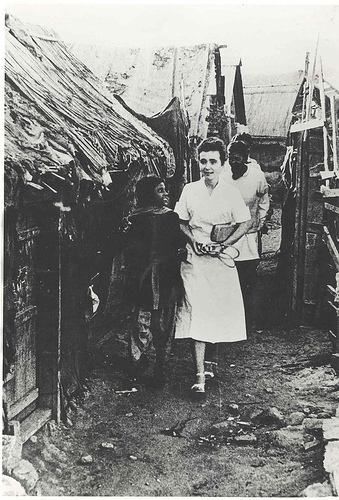
Although the order sent her to southern India, a visa foul-up left her stranded in Karachi, Pakistan. By chance, she visited a leprosy colony there, where she met one of the million Pakistanis afflicted with the disease. She later described the scene to the BBC: “He must have been my age — I was at this time not yet 30 — and he crawled on hands and feet into this dispensary, acting as if this was quite normal, as if someone has to crawl there through that slime and dirt on hands and feet, like a dog.”
The experience stunned her. “I could not believe that humans could live in such conditions,” she said. “That one visit, the sights I saw during it, made me make a key life decision.” That was when she moved to the little hut by the garbage dump, to care for leprosy patients. A few years later she trained at the Christian Medical College in Vellore, where Dr. Brand was devising new surgical treatments for leprosy patients.
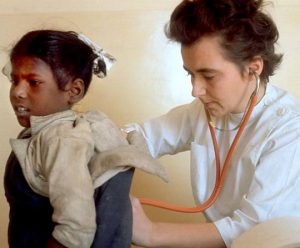
In the following decades, Dr. Pfau helped establish 157 leprosy clinics across Pakistan. She crisscrossed remote mountain ranges, performing surgeries in primitive conditions in 100̊ heat. The number of active leprosy cases plummeted to 531. Primarily due to her efforts, in 1996 the World Health Organization declared Pakistan the first country in Asia to have controlled leprosy. The German consulate in Karachi declared, “It was due to her endless struggle that Pakistan defeated leprosy.” Undaunted, she expanded her clinics to treat tuberculosis, blindness, and disabilities caused by land mines.

Throughout, Dr. Pfau lived in a single room, rising at 5 a.m. to pray and worship before tending to patients and dealing with government bureaucrats. She mobilized her clinics to treat victims of a drought, an earthquake in Kashmir, and a devastating flood. A grateful nation granted her Pakistani citizenship and heaped awards on her. On her 70th birthday, Muslims and Christians alike filled Karachi’s main cathedral to attend a service in her honor.
When asked about her retirement, Dr. Pfau responded, “I don’t use the word ‘retirement.’ “It sounds as if you had completed everything, as if life was over and the world was in order.” She would spend seventeen more years serving the needy in Pakistan.
Just two months ago, in August, Dr. Pfau died at the age of 87 in the country she had come to love. Prime Minister Shahid Khaqan Abbasi said, “Dr Ruth Pfau may have been born in Germany, [but] her heart was always in Pakistan.” He added that, “she came here at the dawn of a young nation looking to make lives better for those afflicted by disease, and in doing so, found herself a home. We will remember her for her courage, her loyalty, her service to the eradication of leprosy, and most of all, her patriotism.”
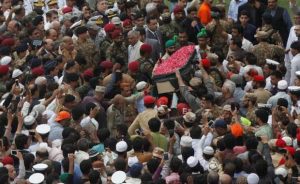
Then the prime minister announced that a state funeral would be held for her, the first Christian woman to receive such an honor. Huge crowds of mourners, including the nation’s president, lined the streets of Karachi as a military guard carried her coffin to the city’s St. Patrick’s Cathedral. The state television broadcast the funeral service live as politicians, military officials, and dignitaries paid tribute to the woman who had become known as “Pakistan’s Mother Teresa.” Flags across the nation were flown at half-mast in her honor. The government renamed its largest teaching hospital The Dr. Ruth K. M. Pfau Hospital.
I never met Dr. Pfau, but as a journalist I have met dozens of dedicated servants across the world who bring healing, compassion, and mercy to some of the most neglected and needy people on earth. They rarely get the same press coverage as lone wolf terrorists or Islamic extremists. Yet they offer lasting proof that even in this dark world, light shines out.
(Note: If you know of other “servant heroes,” please tell us about them in the Comment space below.)


Overwhelmed, challenged
Being focused is so important.
Thank you for sharing.I attended a meeting where you spoke several years ago in Cairo, Egypt.
Great testimony. It is such a shame that we as Christians can’t be honest about our struggles and doubts. You (like David) had valid reasons to lament and question. Way to persevere! God bless you.
My roommate from Concordia College, St. Paul, MN. was a Bible translator in New Guinea. But he was more a friend and adopted father to the Ippili people he served and gifted the Ippili NT as he culminated 43 years in New Guinea. They were his family and countryman. He often said he was not comfortable in the US any longer even though he had a loving family and friends in South Dakota in a rural parish outside of Aberdeen. He buried his wife of cancer, remarried to serve some more in NG, finally dying himself of cancer.
1200 Ippili folk gathered in a stadium in his last days as he landed in a helicopter with the first copy of this precious Scripture gift.
He and I had signed up for India…visa closed last year of sem…he went to NG. I buried my regrets that I was “stuck” in the USA at his graveside and thanked the Lord for knowing him and people like Mother Theresa, Dr. Pfau, Philip Yancey and Paul Brandt. God has blessed the poorest of the poor with our hands and feet. I tried to imulate their examples here in the states!
Thanking God for Mr Yancey, his family, and RBC who made the special on the Brand family and their work and loving witness, we feel so blessed, privileged and inspired to know and love you, from Andrew and Nadine in Melbourne Australia xxxxxxxx
Awesome! Don’t forget about the Muslim Mother Teresa in Pakistan, the amazing Abdul Sattar Edhi.