
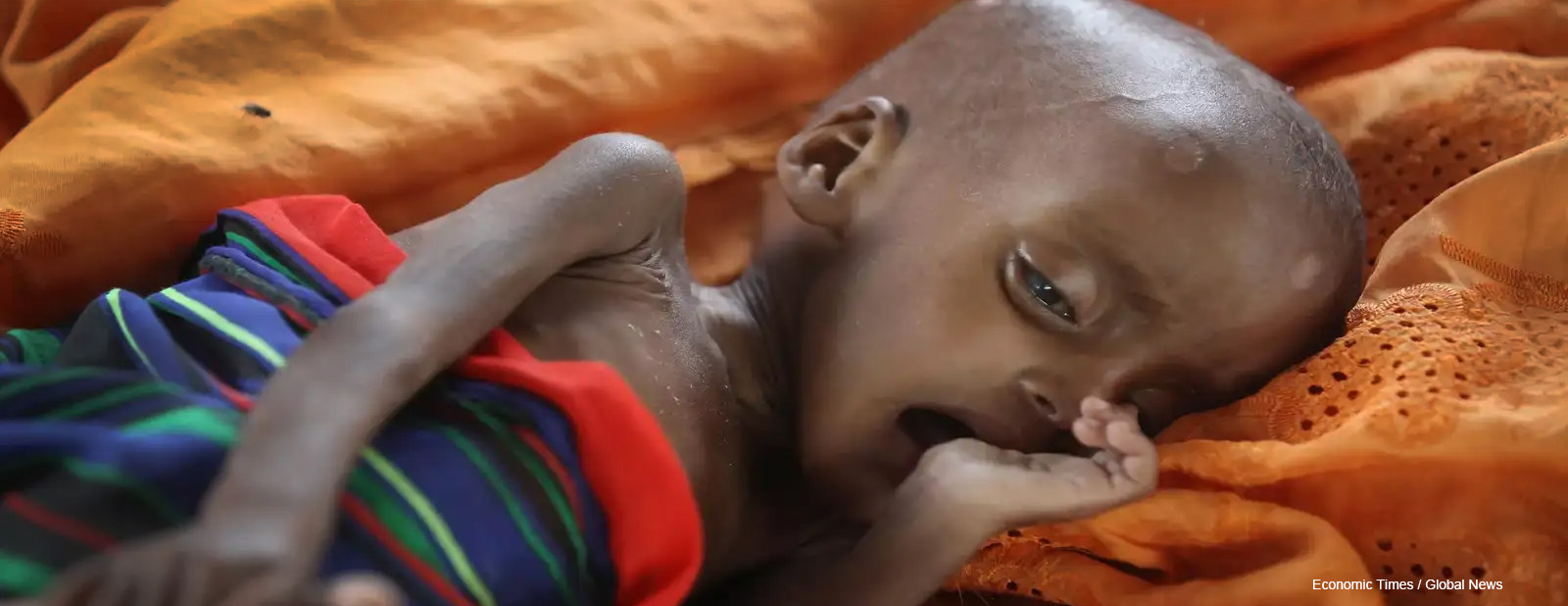
I’ve been watching an argument play out on news channels and the Internet. Bono, the Irish singer who leads the rock band U2, has been appearing on talk shows and podcasts, urging Americans to restore some of the foreign aid projects that have been canceled. When he cited an estimate that 300,000 people may have already died as a result of budget cuts at USAID, some conservatives went ballistic.

Elon Musk called Bono “a liar/idiot” and Secretary of State Marco Rubio insisted that zero people had died because of the cuts. Then Nicholas Kristof of the New York Times rebutted Rubio’s claim by posting photos of children who had died after losing access to medicine, due to the 83 percent reduction in USAID programs.
In Bono’s words, “As an activist, I’ve witnessed people die for the dumbest reasons—hunger when food was out of reach…disease when simple treatments were not available. I’ve also witnessed America come in like cavalry, especially in the fight against HIV/AIDS where you’ve saved 26 million lives and counting. I have never in all my years, until the last 3 months, witnessed medicines already paid for kept from the sick or dying, emergency food supplies left rotting in warehouses, bread kept out of the hands of chronically malnourished children whether Sudan, Gaza…so many trouble spots…all to score political points. Even in divided times there are things we can all agree on.”
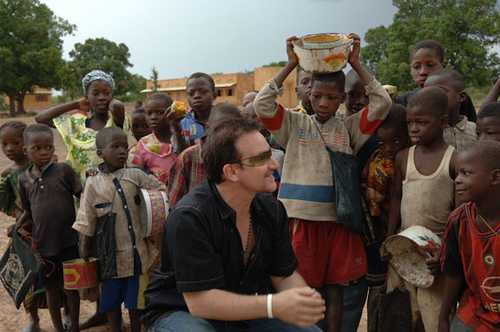
Indeed, there was a time not so long ago when both sides of the aisle did agree. Back in 2003, conservatives and progressives alike voted to fund the program known as PEPFAR (President’s Emergency Plan for AIDS Relief), which has been credited with saving 26 million lives, mostly in Africa. When the program widened its target to include tuberculosis and malaria, the total reached 65 million lives saved—more than the combined populations of New York and California.
“That’s the America we love and that the world needs,” said Bono. “It’s why I call the United States ‘God’s Country.’”

I will leave the debate over lives saved and lost to the statisticians. The news coverage, though, stirred up memories of my visits to faith-based clinics and hospitals around the world. The renowned fistula hospital run by Catherine Hamlin in Ethiopia and later sponsored by Oprah Winfrey. A tent city in Somalia where a handful of nurses worked around the clock to cope with the health needs of 60,000 refugees. Clinics in South Africa that could offer little but compassion before the introduction of antiretroviral drugs to treat HIV/AIDS. And, not least, my visits to leprosy colonies in rural India with the surgeon Paul Brand.
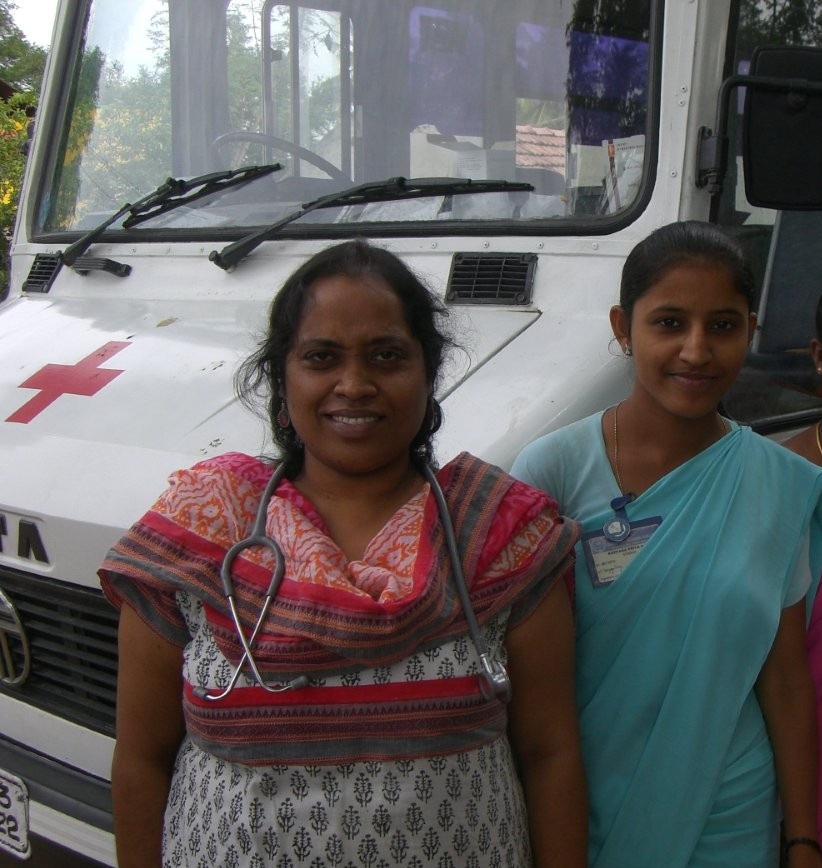
On my travels I interviewed doctors, nurses, and physical therapists. “Why did you sign up for a job like this?” I asked. “The pay is lower and conditions are much harsher than you would find in the US or Europe.”
“Yes, but we get to practice real medicine,” one doctor answered, echoing many others. “I don’t have to spend half a day filling out forms for liability insurance and Medicare. I can take as much time as the patient needs, without glancing at my watch every five minutes to see if I’ve exceeded the allotted time for that appointment. I use my vacation time to go on mission trips that remind me why I went into medicine in the first place.”
These health workers are carrying on an ancient tradition of Jesus’ followers ministering to the sick. When plague hit villages in the Roman empire, the early Christians stayed behind to care for their pagan neighbors’ relatives as well as their own. Later, religious orders built the first hospitals and hospices. During the Middle Ages the Benedictine order alone operated 37,000 monasteries and houses devoted to the sick. Most US cities still have hospitals with names like Presbyterian St. Luke’s, Sisters of Charity, and Advent Health, reminders of their religious roots.
Health care is one area in which governments and non-government organizations (NGOs) can work hand in hand. Even today faith-based missions provide medical care for 25 to 50 percent of sub-Saharan Africa. The nation of Ghana has 245 hospitals owned and controlled by churches or mission agencies, and Cameroon relies on NGOs for 40 percent of its national health care.
After listening to both sides of the debate over foreign aid, I can think of three reasons for the US to reconsider the aid cuts. First is the moral argument. We know that a modest investment can make a huge difference in saving lives. The total portion of US humanitarian foreign aid amounted to one-half of one percent of the overall budget. Yet medicines supplied through PEPFAR protected almost 8 million babies from getting an HIV infection—at a cost of 12 cents a day per child.
Closely following the moral argument comes the strategic argument. Since World War II the United States has led the way in responding generously to major crises. There is no way to calculate the value of goodwill we receive from nations who know us through the aid—food, water, tents, field hospitals—that we’ve supplied after a typhoon or drought or earthquake. If the US halts such interventions, our rival China will happily step in, shifting loyalties across the globe.
The third reason: Faith-based organizations prove more effective than the government. The Clinton administration, no great ally of conservative Christians, first began to promote faith-based agencies because it saw the results of groups such as Prison Fellowship, the Salvation Army, and Teen Challenge in dealing with crime, alcoholism, and drug addiction. Programs that include a spiritual dimension tend to have a higher success rate than their secular counterparts. As a result, USAID started contracting with organizations such as World Vision and Samaritan’s Purse to dispense medical care overseas—the very care now slashed in Elon Musk’s budget cuts.
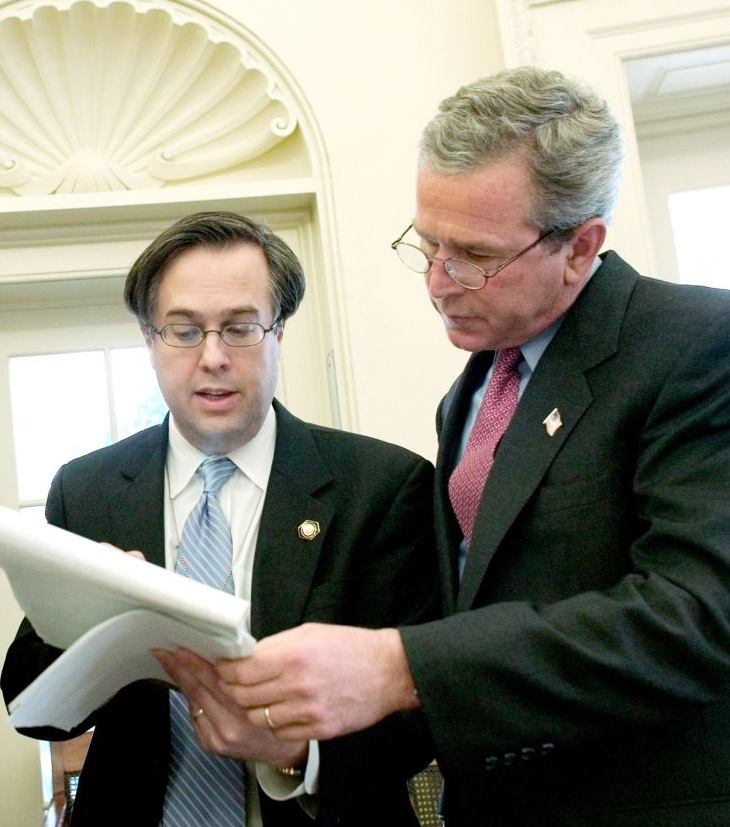
The dedicated aid workers I have known describe their work more as a calling than a job. Michael Gerson, a Wheaton College graduate, championed the original bill to launch PEPFAR under George W. Bush’s administration. He would quote these words from Jesus’ parable in Matthew 25: “…whatever you did for one of the least of these brothers and sisters of mine, you did for me.” Christian history includes a strange chapter about people who took those words quite literally.
In the Middle Ages, as leprosy ravaged Europe, an odd rumor spread that Jesus himself must have had the disease, on account of the prophetic description in Isaiah 52-53 of a Servant “disfigured beyond that of any man.” Leprosy became known as the Holy Disease and, instead of shunning its victims, Christians in Europe sought out those with leprosy as representatives of Jesus.
The devout looked past the unsightly symptoms of leprosy and began treating the sufferers as they would treat Jesus. Orders of nuns devoted to Lazarus (the beggar in Jesus’ parable who became the patron saint of leprosy) established homes for patients—2,000 such homes in France alone. These courageous women could do little but bind wounds and change dressings, but the homes themselves, called lazarettos, helped break the hold of the disease in Europe, by isolating leprosy patients and improving their living conditions. In the nineteenth and twentieth centuries, Christian missionaries who spread around the globe established colonies for leprosy patients, and as a result many of the major advances in treating leprosy came from missionaries.
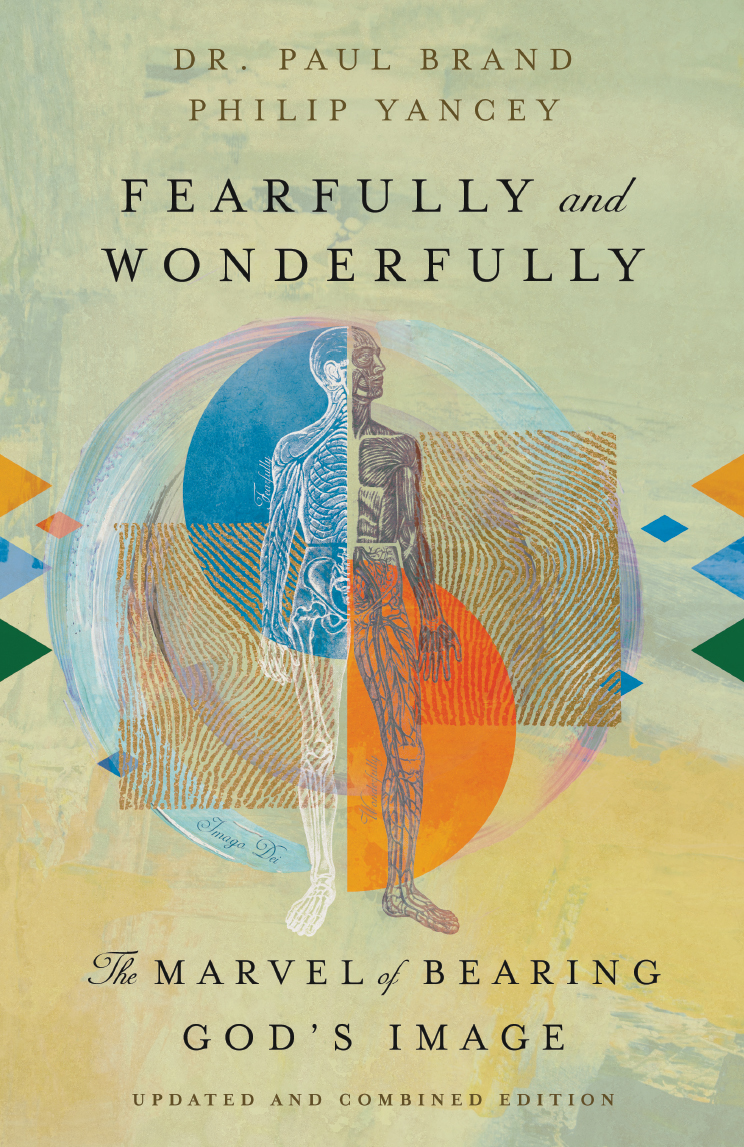
One scene from India stays with me. While researching the book Fearfully and Wonderfully, I visited a treatment center for leprosy and interviewed some of the patients. Sadan was one of Dr. Brand’s favorites. He looked like a miniature version of Gandhi: skinny, balding, perched cross-legged on the edge of a bed. In a high-pitched, singsong voice he told me wrenching stories of past rejection. The classmates who made fun of him in school, the driver who kicked him—literally, with his shoe—off a public bus, the many employers who refused to hire him despite his training and talent, the hospitals that turned him away.
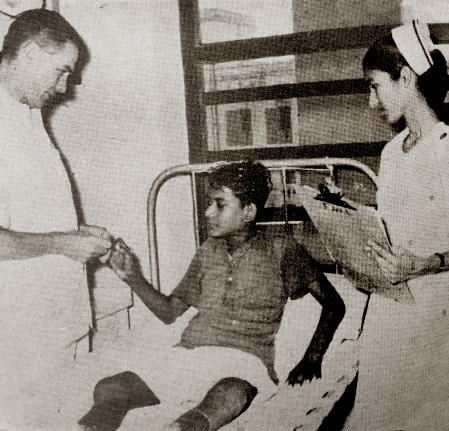
“I can still remember when Dr. Brand took my infected, ulcerated feet in his hands,” said Sadan. “I had been to many doctors over the years. A few had examined my hands and feet from a distance, but Dr. Brand and his wife were the first medical workers who dared to touch me.”
Sadan then recounted the elaborate sequence of medical procedures—tendon transfers, nerve strippings, toe amputations, and cataract removal—performed by Brand and his wife (an ophthalmologist). His past life was a catalogue of human suffering. But as we sipped our last cup of tea, Sadan made this astonishing statement: “Still, I must say that I am now happy that I had this disease. Apart from leprosy, I would have been a normal man with a normal family, chasing wealth and a higher position in society. I would never have known such wonderful people as Dr. Paul and Dr. Margaret.” He pointed to a photo of the Brands hanging on the wall and a slip of paper tucked into the frame. On it he had written these words: May the God who lives in them live also in me.

More than 1,000 Christian hospitals in modern India have committed to serving resource-poor people of India living in remote and difficult-to-reach areas of the country. Of India’s billion-plus population, less than 3 percent identify as Christian, and yet Christians are responsible for some 20 percent of the nation’s health care.
If you say the word “Christian” to an Indian peasant—who may never have heard of Jesus Christ—the first image to pop into their mind may well be that of a tiny clinic, or of a medical van that stops by the village once a month to provide free, personal care in Christ’s name. It’s certainly not the whole of the gospel. But it’s not a bad place to start.


I have spent most of my life in the world of relief and development. “Most of my life…” includes my childhood, as my parents took my brother from one challenging area of the World to another. Bush hospitals, to refugee camps, to refugee resettlements, to war recovery, all before I graduated high school. As an adult, I have worked everywhere from Somalia to Hong Kong, going to where God has led us in relief and development.
Along that journey, I have sent spectacular successes as well as abysmal failures. And there was a trend – the closer to the ground people worked, the more they worked WITH local people, the greater the success. Conversely, the more removed from the project, the less involved the local population, the bigger the failure. And this is particularly of American foreign aid. I worked one project in Afghanistan with a small nonprofit (NGO). There was an American foreign aid project with a similar goal. When I left, the small NGO was seeing the successes pile up. The American foreign aid project, with a budget 10xs as large as ours, failed completely.
Later, I happened across an article from one of the major newspapers claiming they failed on the 8 figure, American tax payer funded project, because the Afghans didn’t want what the project wanted to give. However, in our project, with the same goal, this was disproved. But, because no one felt like going to Afghanistan to verify the truth, this lie was accepted.
So, what am I saying? There is a place for US foreign aid, but it needs to be focused as closely to the people who need it as possible. The amount of money govt foreign aid departments, the UN and other multinational organizations spend on travel, conferences and themselves would go a long way towards meeting the needs of the sick and hungry. As Christians, if God is calling us to support those in the field, we must do our due diligence in seeking out who is effective, who is achieving results, who is willing to be transparent with the funds entrusted in them.
Keep in mind, in Matt 25, when the sheep & the goats are separated, the examples Christ uses are personal, will be focused on us individually, not the foreign aid departments of our respective governments.
I’m confident the grace of Jesus Christ is sufficient for the individual, and is not contingent upon whether or not a government charity continues to throw money in the proper pockets for the right causes. I’m a prior service Marine, 1980-86, and retired medical-surgical nurse, 1992-2022, and I would like to know precisely where Bono saw medicines and supplies rotting. I understand that legitimate aid programs were temporarily delayed until audits were completed. As well, I wonder why evangelical zionists and Christian denominations of the West haven’t condemned and sanctioned Israeli leadership for their siege warfare against, and indiscriminate targeting of, non-combatant Palestinian Christians and Muslims in the closed battle space of Gaza. They severely restrict or cut off humanitarian and medical aid, and leave survivors to suffer and die from hunger, thirst, disease, physical and psychological trauma. There is a full century’s history of ethnic cleansing that began with socialist zionists being allowed to settle in The Levant under the British Mandate of Palestine after WW1. I am certain the sheep from every nation have no part with the goats, as surely as we will not be judged by the iniquities of the Obama-Biden fascist party, who aided and abetted the state-sponsored terrorism of Iran, nor by the Reagan administration’s deal with the devil prior to his inauguration in the Iran-Contra affair. I very well recall what happened to American Marines and French paratroops at Beirut in 1983. Let’s not conflate New Testament parable with the nasty messiness of American politics and delicate nature of a Constitutional Republic–if, God willing, we can keep it from the destructive forces of the rulers of darkness in high places.
“It’s certainly not the whole of the gospel. But it’s not a bad place to start.” Isn’t this where Jesus started? Thanks for the good words.
I live in South Africa. Already the slashing of funds has caused highly qualified South African medical personnel who were working on HIV research to lose the jobs they were passionate about, as well as many other people working in relief and aid organisations. The US funded many projects and NGOs employing South Africans, serving other needy South Africans. If the projects fold because of lack of funds, those they served suffer, and the personnel serving with the project/NGO lose their employment. This is a massive crisis, which occurred with no warning, no managed withdrawal of support, no compassion.
These are not multinational organisations flying to costly conferences, though no doubt such situations do exist. These are hardworking people, sacrificing their own comfort to serve the needy. Funds from foreign countries multiply when sent to poorer countries, and cannot easily be replaced by local support. We know some of these people who are now desperately trying to raise support elsewhere so their work can continue. It’s a heartbreaking situation.
Thank you Philip for your constant loving call back to our mission.
As to your conclusion that, “it might not be the whole of the gospel…” After 40 years of trying to live, preach, & teach the whole of the gospel I am not so sure any more that it just might be.
If we have loved, we have fulfilled the whole of the gospel.