

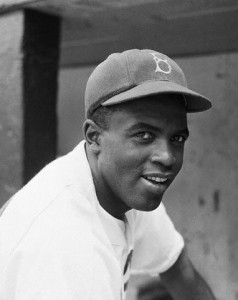
 Last week I saw the movie 42, the story of Jackie Robinson, the first black major league baseball player. Critics have found fault with 42 for being predictable and simplistic, but for long stretches while watching I had a lump in my throat, a lump of remorse and shame. You see, I grew up in Atlanta, Georgia, in the tumultuous days of the civil rights movement.
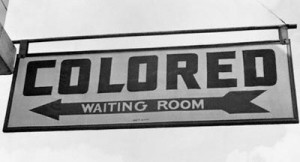 The Jim Crow culture that shocked Jackie and his wife as they traveled in the South was the accepted environment of my youth. Although Atlanta had almost equal numbers of black and whites residents, we ate in different restaurants, played in different parks, and attended different schools and churches.

By law black people could not serve on juries, send children to white public schools, use a whites-only bathroom, sleep in a white motel, sit on the main floor of a movie theater, or swim in a white swimming pool. Motels and restaurants refused service to African-Americans, and gas stations had three rest rooms: White Men, White Ladies, and Colored.
My high school was named for a Confederate general, and when I graduated in 1966 no black student had ever set foot on campus. We believed that Malcolm, a short kid with a crew cut who wore metal taps on his shoes and loved to pick fights, singlehandedly kept them away. Reputed to be the nephew of the Grand Dragon of the Ku Klux Klan, Malcolm had put out the word that the first black student in our school would go home in a box.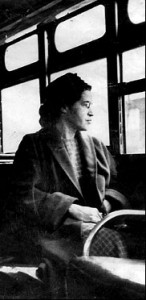 When I rode Atlanta buses, workmen and maids sat dutifully in the rear section and were required by law to give up a seat if a white rider wanted it. In neighboring Alabama, blacks had to enter the front door to pay the driver, then exit the bus and walk outside back to the rear door —until the bus boycott led by the courageous Rosa Parks.
Those who grew up outside the South may find the mean racism in 42 incomprehensible. Actually, it was worse than the movie depicts. As a high school student I attended a political rally held at a fairgrounds racetrack. Sponsors had brought together such luminaries as Alabama’s governor George Wallace and a national officer of the ultra-conservative John Birch Society, as well as Atlanta’s own 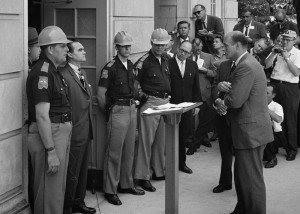 Lester Maddox (who would later serve as Georgia’s governor and run for President). We waved tiny rebel flags and cheered as the speakers denounced Washington for trampling states’ rights. A group of twenty black men, showing bravery such as I had never before seen, showed up at that rally just to observe. They sat together in a conspicuous dark clump in the bleachers.
Shortly after a rousing rendition of “Dixie,” hooded Klansmen arose from the crowd and began an ominous climb down those bleachers, surrounding the cluster of black men. The blacks looked around in vain for an escape route. At last, frantic, a few of them started climbing a thirty-foot chain fence designed to protect spectators from the race cars, and the Klansmen scrambled to catch them. The speaker’s bullhorn fell silent, and we all turned to watch the Klansmen pry loose the clinging bodies, as though removing prey from a trap. They began beating them with fists and with ax handles like the ones Lester Maddox sold in his fried chicken restaurant. After a time, a few Georgia State Patrol officers lazily made their way over and made the Klansmen stop.
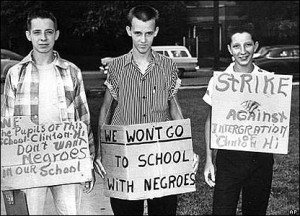 Today I feel shame, remorse, and also repentance. I grew up talking about “nigras,” not African-Americans, and swallowed the doctrine taught in my church that blacks were inferior, cursed by God. It took years for God to break the stranglehold of blatant racism in me—I wonder if any of us gets free of its more subtle forms—and I now see that sin as one of the most poisonous, with perhaps the most toxic societal effects. When experts discuss the underclass in urban America, they blame such things as drugs, changing values, systemic poverty, and the breakdown of the nuclear family. Sometimes I wonder if all those problems are consequences of a deeper, underlying cause: our centuries-old sin of racism.
Traveling to other countries helped me see that the poison of racism is near-universal. Finns tell jokes about Swedes, who tell country-bumpkin jokes about their Norwegian neighbors, though to a non-Scandinavian they all seem alike. The Japanese look down on Filipinos while Chinese and Koreans bear historic grudges against the Japanese. On my first trip to the pristine nation of New Zealand I turned on a radio station only to hear Kiwis speak about the Maoris with words that could have come from the American South: “Now, I’m not prejudiced or anything, but just look at how they keep their houses and yards. They’re dirty people, they don’t take care of things.”
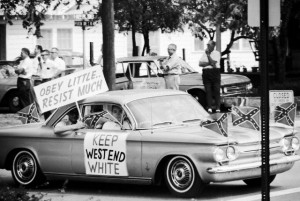 In the movie Mississippi Burning, Gene Hackman plays a good ole southern boy who says, “If you ain’t better than a black man [only he uses the N word], who are you better than?” He adds, “Everybody’s got to be better than somebody. It’s just human nature.” Black people gave us Southerners someone to look down on, someone to mock and feel superior to. My family moved every year or two when the rent went up, and lived sometimes in government projects and sometimes in trailer parks. Sociologically, we may have qualified as “poor white trash.” But, our only solace, at least we were white.
 n 1947 a brave young man named Jack Robinson was asked to take on the racist establishment of major league baseball, which the movie 42 portrays in all its ugliness. Branch Ricky, a cigar-chomping Methodist who understood showmanship as well as Christian ethics, selected Robinson from a pool of equally talented African-Americans because of his character.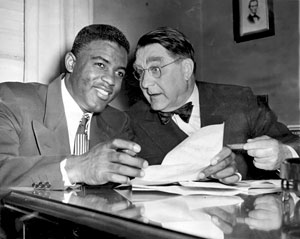
In a climactic scene, Robinson asks, “You want a man who doesn’t have the guts to fight back?” No, Ricky replies, “I want a man who has the guts not to fight back.” Though the movie doesn’t show it, he proceeded to read a devotional passage about the Sermon on the Mount in which Jesus replaces the age-old formula of “an eye for an eye and a tooth for a tooth” with the far more radical principle “turn the other cheek.”
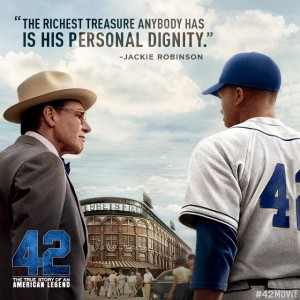 That first year, Robinson had much opportunity to put Jesus’ principle into practice. Pitchers aimed fastballs at his head, opposing managers taunted him with obscenities and racial slurs, fans booed him, his own teammates organized a boycott against him. Day after day, Robinson later admitted, he would get on his knees and pray for endurance and patience.
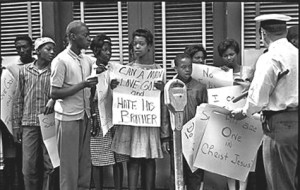
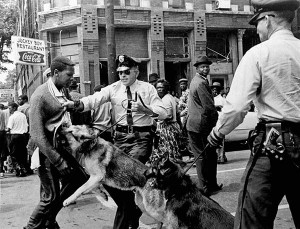
Observers of the South sometimes speak of it as “Christ-haunted.” Perhaps they should speak of it as “race-haunted” as well. All of us, white or black, who grew up in the South in those days bear scars. Some black people, beaten by truncheons and bitten by police dogs, bear physical scars. We whites bear spiritual scars. Although I have not lived in the South for forty years, I live with its memories, like the medieval murderers who were forced to wear the corpses of their victims strapped to their backs. The entire nation bears scars. Who would suggest that we have achieved racial harmony, anything like “the beloved community” that Martin Luther King Jr. longed for?
 I once visited King’s old church in Atlanta, Ebenezer Baptist, and sat in tears as I saw through new eyes the moral center of the black community that gave a group of people the strength to fight against bigots like me. I was on the outside in those days, cracking jokes, spreading rumors, helping sustain a system of evil. Inside the church, and for a time only inside the church, the black community stood tall. My eyes, blinded by bigotry, could not see the Kingdom of God at work.
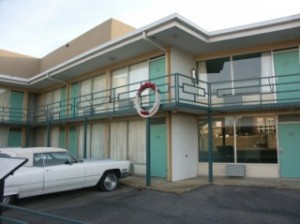 In November 2008 I toured the museum in Memphis built around the motel where Martin Luther King Jr. was assassinated. For several hours I revisited the scenes I had known as a teenager coming of age in the South. I stood beside the Formica lunch counter salvaged from Greensboro, North Carolina, and watched videos of the college students who had sat on these vinyl seats as thugs stamped out cigarettes in their hair, squirted mustard and ketchup in their faces, then knocked them off the stools and kicked them while white policemen looked on, laughing. On a nearby screen I saw the eerie scene of black children flying weightless through mist in Birmingham, Alabama, propelled by high-powered fire hoses, as snarling German Shepherds lunged toward them.
 One room displayed a bus from Montgomery, Alabama, like the one in which Rosa Parks had refused to change seats, its two sections demarcated “Whites Only” and “Colored.” Another room displayed a larger bus charred black, the actual Greyhound burned to a crisp by an Alabama mob intent on chasing away the Freedom Riders, who were trying to integrate transportation. As the bus burned, the mob held its doors shut, hoping to incinerate the young riders inside. With help from highway patrolmen the Freedom Riders escaped, though badly beaten with iron pipes and baseball bats, only to have the local hospital turn them away.
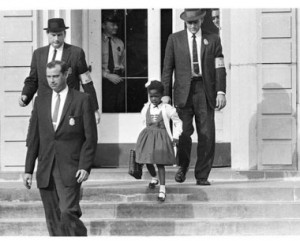 Looking back, it seems incredible to imagine such ferocity directed against people who were seeking the basic ingredients of human dignity: the right to vote, to sit on a bus, to eat in restaurants and sleep in motels, to attend college. With shame I recalled cheering along with classmates at my all-white high school as Southern sheriffs arrested the “outside agitators” of the civil rights movement.
On the grounds of the museum, the hauntingly prophetic words from King’s final “I have been to the mountaintop” speech are forged in steel, words that caught in my throat on a sunny day mere hours after Barack Obama got elected: “I may not get there with you, but I want you to know that we, as a people, will get to the Promised Land.” The day after he delivered that speech King died in a pool of blood on the very spot where I was standing, on the balcony of the Lorraine Motel.
The world of 2013 is a different place than that of 1947. My high school has since been renamed for a black astronaut; my church that once barred black visitors eventually sold their building to an African-American congregation. People of any color can eat, sleep, go to school, and drink from water fountains wherever they want. The U. S. shocked the world by electing an African-American President. These seismic changes in racial attitudes worldwide trace back to a few brave individuals who stood against the tide: Rosa Parks, Martin Luther King Jr., Nelson Mandela, Gandhi, and yes, in his own way, Jackie Robinson.
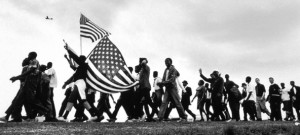
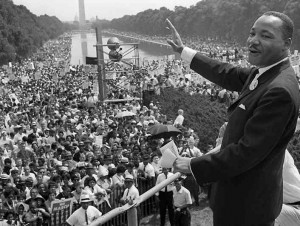 And what role did the church play in this the central political drama of the 1960s? The civil rights movement had religious roots and was led by ministers like King who challenged an unjust system from the outside; in the tradition of biblical prophets they appealed to a higher law than the ones written by legislators. Some white Christians joined the leaders on the front lines in Selma, Alabama, and Jackson, Mississippi, while others worked within the system to overturn unjust laws—but not all did so.
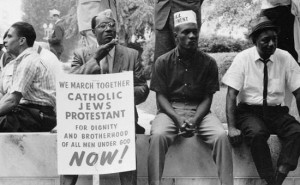 The church I attended while growing up in Atlanta took pride in the purity of its evangelical theology, and yet on this issue most church members came down solidly on the wrong side. Like many white churches in the South, mine stubbornly opposed the civil rights movement. It amazes me that slaves from Africa so readily adopted the religion of their owners and that African-American churches thrive today; surely the whites’ gospel must have sounded like bad news at times rather than good.
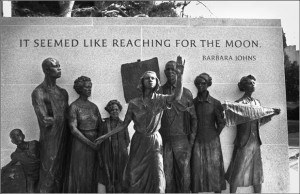
It took Southern Baptists 150 years to apologize for their support of slavery, and not until November 2008—two weeks after Obama’s election—did Bob Jones University admit their error in barring black students before 1971 and banning interracial dating until 2000. “We failed to accurately represent the Lord and to fulfill the commandment to love others as ourselves,” said their president Stephen Jones. Those words of apology apply to me and many other evangelicals who opposed the civil rights movement.
I could not help wondering, as I viewed the exhibits at the museum in Memphis, how much of the average Christian’s politics gets formed by surrounding culture rather than by the gospel of Jesus. As Stephen Jones further admitted in his apology,
…for far too long, we allowed institutional policies regarding race to be shaped more directly by that ethos than by the principles and precepts of the Scriptures. We conformed to the culture rather than provide a clear Christian counterpoint to it.
Thank you, Jackie Robinson and all the others, for showing us a different way, for providing a clear Christian counterpoint to a culture of violence, racism, and Ungrace. And God, open our eyes to the planks in our eyes that still blind us on other issues.


This is a great confession, and something that’s been needed for a long time. For generations the problem was ignore (while secretly opposing racial progress), and now, many diehard conservatives insist all of that doesn’t matter, and that the “anti-God” liberals are wrongly playing a “race card” on them, so that blacks can get “freebies”, and politicians get their votes. All of this rhetoric you can hear loudly, today.
Considering that many of these people are still alive, and it becomes clear that all the rabid hatred against Obama is more then mere “disagreement” as they insist (Christians used to say that one must respect and pray for our leaders; now it’s “he’s not my president”!), and that the “contemporary music debate” among old-liners in the Church (including BJU and others) is more than a concern for “holiness”.
Also, that the rejection of psychology by these same people is more than a concern for “Biblical means of counseling”; for it explains a lot of their behavior; particularly the fierce denial, and fingerpointing at others as trying to dominate and destroy them (projection).
Listening to all the anti-Obama rhetoric, cloaked under patriotism made me realize that the main problem is that people are trying so hard to defend the “honor” of the nation, and to do that, they can’t admit any of this stuff. They have to prove it was justified, and then then, not really that bad (“it improved their lives over tribal existence; you should be thankful” I was told on a Christian board once). Yet here you are coming from that background on the dominant side, confirming it was bad and worse.
So they have to not only justify or sweep under the rug these things, but also for a second barrel, continue to prove that blacks are the cause of all our financial, moral and cultural problems, and the ultimate judgment is that they just want to leech off of everyone instead of just improving their families and work ethic “like everyone else did”. So they compound the old racism with new racist sentiment.
The primary fundamental of the faith, what it’s all founded upon, is that the way to deal with sin and guilt is to confess and forsake it (Prov. 28:13), but the people who preach this the most; defend it against all “compromise” and unbelief, etc. just won’t do it themselves for that issue. They don’t seem to have a clue, that this is what is required of them (not the stuf they assume others are trying to get from them). They’d rather focus on other people’s sins, such as sex-related stuff or liberal policies.
So we really need more from within our ranks to call this stuff out.
Where do I begin?
My earliest memories of racism came about in an intensely personal way: my white, non-Christian, divorced mother gave birth to a half black baby. She did this in a rented house in Huntsville, Alabama, by herself, while a doctor talked her through the procedure over the phone. She knew what would have happened to her and the baby if she gave birth to him at a “white” hospital. This was in 1967. Of course my two older brothers and I (the only girl) were deemed “n—er lovers”. My mother, now having a baby and three other children to feed, but unable to work because of the baby, was forced to apply for assistance and this she did. I still remember Mom making us kids solemnly promise not to ever divulge the name of our baby brother’s probable father to any one at any time because of what might be done to him if we accidentally gave authorities his name.
We moved into the Sparkman Homes, rental houses, hotel rooms, trailer parks. We children were constantly hungry. ( To anyone who ever wonders if free lunches in schools are worth it, I would like to tell you, YES. Sometimes they were my only meal, especially if Mom was working at night). My mom was pretty enough that she always had boyfriends; they were all white. One of them left us kids one day when Mom got a job as a census taker. A neighbor called what today is known as the DHS, upon finding urchins knocking at her door and asking for food. We were all put into foster homes (praise God for the dear people that took us in) and we all eventually went to separate homes, although my baby brother (by now 4 almost 5) stayed with me in my first home.
At the second foster home, Jesus found me and I was born-again into God’s family. When my brother came for a visit, my foster mother realized he was black, and from that time on, despised me (I will say here that I was an emotional wreck by that time, so racism was not the only factor in the treatment I began to receive, I’m sure). But within a few weeks, I had a new foster home, and then another…and the fifth home. If I may say something from the bottom of my heart here – every single foster home that my brothers and I went to were Christian homes. This is such a testimony. Is someone reading this unsure about whether to help out at an inner city school, adopt a handicapped child, become a big brother or sister? Please don’t wait. I know Jesus Christ today because total strangers took me in.
My Mom…I think the word “indomitable” was invented to describe her – got three of her children out of foster care. It would have been so easy to let her troubled kids stay in the system and be cared for by others. But she met the most amazing man – my Dad for the past 42 years – and married him.
The Alabama authorities told Mom (and Dad – God bless the “Josephs” of our generation, who stand in the gap for not only the children they didn’t father, but for the women reviled by their “better” peers) that it was “better” if our baby brother stayed with a family of his own color. So he was put up for adoption. God being gracious to us, we would all meet again two decades later when my brother had his court records unsealed, and looked us up.
Racism is a hideous thing. I would like to tell you that I have never committed a racist deed, thought a racist thought, looked at black (and brown, and slanted eyed, etc.) people as “other”. But I have had my racist moments – the most painful one being when I found myself pregnant and unmarried and unsure what color my baby might be when born. Asked who the father of my baby was when I applied for residency at a halfway house for runaways and pregnant girls, I said I wasn’t sure. But: I had been raped by a black man, I told the questioner. So my baby might be half black.
The year was 1978.
Fast forward many years. In 2008 our first president of color is elected. I did not vote for him that year, but I prayerfully and happily did in 2012. I have suffered for my vote, too. In the United States of America, where the whole thing about us is that we are FREE to vote our God given consciences. My experiences in the U.S. since 2012 have given me quite an appreciation for what Christians in “closed” countries must go through.
I may live in a different southern state now, but I can tell you with no qualms that racism is alive and well in the deep south. Today, this very day, in our local newspaper, a letter to the editor backslaps the Confederacy with a wink by lauding the awesome folks who take care of “The Sons'” cemeteries…When Tiger Woods was caught in a sex scandal, I had to silence coworker’s jokes. Never heard a smidgen of a joke pertaining to David Petraus’ wrongdoing….One thing I know for sure – many “white” churches are missing the most amazing, God-given opportunity to work with and alongside people of color to truly transform our society and further the Gospel of the Lord Jesus Christ.
Black churches The leadership role of black churches in the movement was a natural extension of their structure and function. They offered members an opportunity to exercise roles denied them in society. Throughout history, the black church served not only as a place of worship but also as a community “bulletin board,” a credit union, a “people’s court” to solve disputes, a support group, and a center of political activism. These and other functions enhanced the importance of the minister. The most prominent clergyman in the civil rights movement was Martin Luther King, Jr. Time magazine’s 1964 “Man of the Year” was a man of the people. He joined as well as led protest demonstrations, and as comedian Dick Gregory put it, “he gave as many fingerprints as autographs.” King’s powerful oratory and persistent call for racial justice inspired sharecroppers and intellectuals alike. His tireless personal commitment to and strong leadership role in the black freedom struggle won him worldwide acclaim and the Nobel Peace Prize.
Throughout this period of nonviolent protest, the civil rights movement continued to suffer the effects of white violence. medgar evers, an NAACP leader who was organizing a black boycott in Jackson, was shot and killed outside his home in 1963. Three participants in Freedom Summer—James Chaney, an African American, and Andrew Goodman and Michael Schwerner, both whites—were killed in Mississippi in June 1964. Events such as these murders outraged many in the nation and solidified popular support for the civil rights cause.
Mr. Yancey,
I only now found this post, but felt I had to respond. I, too, watched the movie 42 with a lump in my throat. I grew up in Southern California in the 1970s. I didn’t know just how bad it was in the South in the 1940s. I, like the Robinsons, had never encountered that type of racism. As a Caucasian, it was never an issue, especially growing up in the West.
When I read articles that said the racism depicted in the movie was toned down, I was appalled. I had no idea what it was like for African-Americans then.
However, just as others have posted, I too have my prejudices, and “racist’ attitudes. Not toward other races, but toward other groups that are outside my common experience. I struggle to change those attitudes. The church I attend is very inclusive, and actively works to include those that some churches turn away. It is an exercise in becoming less prejudiced every Sunday when I attend services. God is working on me, and He is not done yet.
You are my favorite Christian author, and I often read your books with the feeling “Yes, exactly!”. You express my own feelings and struggles very often in your writings.
May God continue to bless you and your family, and may you continue to be a lamp on a lampstand, helping others to see The Way.