

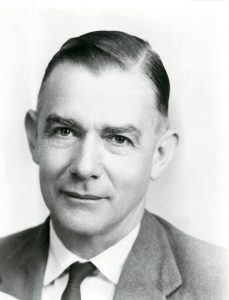
[In Fearfully and Wonderfully, Dr. Paul Brand describes a time when his Christian faith was tested by doubt, especially regarding the issue of evolution.]
In medical school I encountered professors who took for granted that the universe is based on randomness, with no place for an intelligent Designer. As I have grappled with these and other issues, I have learned the value of accepting as a rule of life something about which I have intellectual uncertainties. In other words, I have learned to trust the basic skeleton of faith and rely on it even when I cannot figure out how various bones fit together and why some are shaped the way they are.
For example, in medical school I studied under some of the pioneers of evolutionary theory, such as J. B. S. Haldane and H. H. Woolard. Some churches encouraged a kind of intellectual dishonesty on this subject. In the university their students took exams and recited the theories of evolution; when they joined the church, they declared their faith in a way that contradicted their exam answers. Ultimately this dichotomy led to a type of intellectual schizophrenia.
Only after much research and long periods of reflection was I able to put together what I had learned at church and what I had learned at school. In the meantime, I determined that my faith was based on realities that could stand on their own and did not need to be subordinated to an explanation from science. I operated with that assumption for years during which I was unable to resolve some of the mystery of how creation and evolution fit together. Indeed, in recent years, a new understanding of Big Bang cosmology and of the nature of DNA coding has greatly strengthened my faith in a guiding supernatural intelligence.
 I have stood before a bridge in South America constructed of interlocking vines that support a precariously swinging platform hundreds of feet above a river. I know that hundreds of people have trusted that bridge over the years, and as I stand at the edge of the chasm I can see people confidently crossing it. The engineer in me wants to weigh all the factors—measure the stress tolerances of the vines, test any wood for termites, survey all the bridges in the area for one that might be stronger. I could spend a lifetime determining whether this bridge is fully trustworthy. Eventually, though, if I really want to cross, I must take a step. When I put my weight on that bridge and walk across, even though my heart is pounding and my knees are shaking, I am declaring my position.
In my Christian walk I sometimes must proceed like this, making choices which involve uncertainty. If I wait for all the possible evidence, I’ll never move.
— Dr. Paul Brand
This bridge depicted in the video below is built in traditional Inkan style, much like the bridge Dr. Brand refers to.
[Note: an organization called BioLogos (https://biologos.org) provides many resources for those struggling to put together science and faith. BioLogos was founded by Dr. Francis Collins, director of the National Institutes of Health. Collins led the Human Genome Project and authored the New York Times bestseller The Language of God: A Scientist Presents Evidence for Belief.]

Don’t miss the next post.


Dear Philip. I heard you speak recently in Torquay, UK about your work with Paul Brand.I purchased your book with interest as I have an old friend who you met that evening who had worked with Paul many years ago. Whilst reading your book I bookmarked the passage ‘Trusting the bridge” which summed up my present doubts/dilemma about faith. I completed reading the book only last night and returned to this passage and read it again before sleeping. Imagine my surprise when I received your blog in my Inbox this morning! Should I consider this as confirmation…maybe I need to put my doubts to one side and trust more! Thank you for your writing which has been a great inspiration over the years and helped me when wrestling with my faith.
Iene E.
Thank you for your words of clarification about the Bible. I needed that. “The Bible is not a history book nor a science book; it’s meant to point us to Jesus.” Thank you!
I would recommend Hugh Ross with Reasons to Believe as a better resource than Biologos. He and his group of scientists are brilliant and really explain the world through science and the Bible. Biologos relies on the theory of macro evolution which has never been proven and diminishes the power of God. RTB proves that the Bible had it right all along. Check them out!
Great post Phil. I can’t wait to read it. It’s so refreshing to know of this growing body of work that takes the Gospel to the places of greater resistance with more honest and authentic voices. Leonard Cohen’s song “Anthem” reminds me of this modern calling. Peace. Rick Jebb
I too have most of your books on my shelf as they have helped me thru times of questioning. “Fearfully and Wonderfully Made” I have read more than once.
And so I was deeply disappointed to read that you are now involved with Biologos which undermines the creative works of God.
One author, Jonathan Sarfati, Ph.D., among many, has authored books on refuting the compromise which progressive creationism and theistic evolution necessitate. I would highly recommend his books – our faith in the Bible is being eroded by the claims of evolution which cannot be irrefutably proven.