
A few days ago I got a letter from a Croatian man who introduced himself as the translator of my book What’s So Amazing About Grace? into Croatian. He asked if I would write a preface for the book specifically for Croatia.
“You have referred to the Croatian/Bosnian/Serbian experience during the recent war,” he said. “Although the war ended over 15 years ago, the wounds 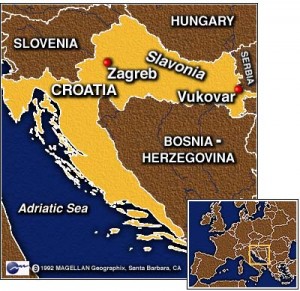 are still here and we are very very far from true reconciliation.” He went on to say that Christians in the Balkans are still struggling with truth and justice, and wonder whether grace can apply without the prior steps of truth and justice.
The Balkan countries still celebrate war criminals as heroes of the nation, often with the church’s approval. Rapes, tortures, concentration camps, ethnic cleansing—these memories of war still haunt the landscape. The translator asked, How can we “do grace” in such a setting? More, how can we keep another Balkan war from breaking out again in several decades?
I did write the preface, beginning with these paragraphs:
If I had originally envisioned this book for a Croatian audience, it would be a different book. How so? I cannot say for sure. The Balkans do not need an American writer to barge in with a limited understanding of your history and culture and offer advice.
For this reason I present this book as a kind of dialogue with you the reader. I depend on you, indeed I urge you, to take what I set forth in these pages and apply them to your own country. At times, as you read, you may find yourself shaking your head and saying, “He doesn’t understand Croatia!” You are right—I don’t. But you do, and it is up to Croatians to come to terms with your recent past as well as your distant past.
I went on to say that as an American I can offer some hope. After all, I grew up in the southern state of Georgia, which endured a brutal campaign by General William Tecumseh Sherman, whom some historians credit as introducing the modern “scorched earth” tactics of total war. His troops burned my home city of Atlanta to the ground, and all over Georgia you can find bronze markers recalling the destruction his armies inflicted during their March to the Sea.
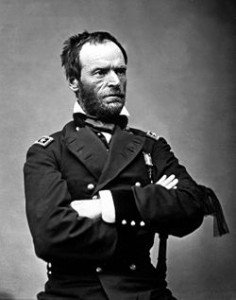 My Philadelphia uncles used to taunt me by asking me to book them a room in Atlanta’s “General Sherman Hotel,” which of course did not exist. We viewed Generals Sherman and Grant as war criminals, and in school we were even taught to scorn President Abraham Lincoln, who had forcibly reunited a divided country. The Georgia state flag incorporated the design of the Confederate flag, and I went to a high school named for a Confederate general. A popular bumper sticker in my childhood featured a cartoon figure of a Confederate soldier with the words, “Hell, no, we ain’t forgettin’!”
Before the Civil Rights Act forced change, we southerners also trampled on the rights of citizens from a different race. In a genteel version of ethnic cleansing, we fought in the courts and sometimes on the streets to keep them out of “our” restaurants, churches, neighborhoods, and schools. One race used to own the other, and I can hardly imagine a starker example of “Ungrace” than the slave trade that brought millions across an ocean to serve wealthy plantation owners. Visit the modern city of Atlanta today, however, and you will find few vestiges of that kind of racial division and regional patriotism. It takes time but wounds heal, justice triumphs, change happens.
Historian Shelby Foote points out that only after the Civil War did Americans start saying “The United States is…” rather than “The United States are….” Our identity as one nation came out of our  bloodiest war. Indeed, I recently learned that the burning of Atlanta played a crucial role in that re-union. Exhausted by war, the Democratic Party of 1864 adopted a platform calling for peace negotiations based on recognizing Confederate independence and nominated General George McClellan to oppose the beleaguered President Lincoln in that year’s election. News of Sherman’s September triumph in Atlanta helped swing popular support back to the Republican incumbent Lincoln, who pursued the war to its conclusion.
More recent times show that the same pattern of healed wounds can apply internationally as well. Two of America’s closest allies are Germany and Japan, the two nations who opposed us in the most destructive war in history. U. S. ties are strengthening with Vietnam, another nation who fought us in a bitter and bloody campaign. I have witnessed similar scenes of reconciliation in places like Germany, where East and West reunited, and in South Africa, where under the leadership of Nelson Mandela a majority race chose the way of truth but not revenge and in the process forfeited justice for the sake of reconciliation.
For these reasons, I have hope for Croatia and its neighbors. Fortunately, Croatia has outstanding scholars and pastors who are seeking how best to apply theology to their nation’s history. Among the most insightful is Miroslav Volf, who emigrated from Croatia to teach at Fuller Seminary in California and then at the Yale Divinity School. The End of Memory, a magnificent book, includes his comments about memories of the traumatic past: “They need not colonize the present nor invade the future by defining what we can do and become. Past wrongdoing suffered can be localized on the timeline of our life-story and stopped from spilling forward into the present and future to flood the whole of our life.”
Grace is the only force I know of that can block the toxic influence of a painful past on the present and the future. As Volf says, “For in the light of Christ’s self-sacrifice and resurrection, the future belongs to those who give themselves in love, not to those who nail others to a cross.”
For years the Balkans have been a laboratory of what I call “Ungrace,” the law in relationships that echoes one in physics: Every action causes an equal and opposite reaction. You have lived with the deadly consequences of that law for centuries. Can the modern Balkans become instead a laboratory of grace? And what would that look like?


Hi everyone! I’m Hungarian and would like to ask why each book is not available in Hungary ? I went to bookstores in the area, but only two have not found your book. Then I checked the online bookstores too (www.konyv-konyvek.hu). Also there are only two I found your book. What is the reason? Not every book has been translated? It will be expected in the future?
Hello Mr. Yancy, I feel compelled to tell you how much your books have meant to me. I and my family have had some tragic things happen in the last ten years and I believe God lead me to your books to help me get through them. I choose to believe that God grieves with us but also prepares us and strengthens us for things that are coming. I won’t say my faith hasn’t been tested but ultimately I can now say it is stronger than ever. I think the word “grace” has such a deeper meaning for me than it did years ago. I have led a couple classes on your book “What’s So Amazing About Grace?” and some of the people in those classes felt it was life changing for them. Thank you so much for what you have done for me with God’s help!
Dezi, I started heading up to bed and came back down to fire up the computer again and write you … for the last time. I’ll stay away from this particular post from now on. First, you are much in my mind, with recent events in your home country and your host country. Second, the most important two worlds that I have experienced have been the missionary enterprise, if you will, as a child, and now the military enterprise, as a spouse. And what I want to tell you as a child of missionaries who loved two people groups Americans do not much love is that God does indeed love the whole world. God never forgets that. He was filled with concern for Nineveh, that great city, even the cattle filling it. (Jonah 4:11) He never forgets one corner of His world, or counts it as lesser than another. He is not confused by the many opinions and justifications each side has … He is not like us!! The only other thing I might say is that, though David, the King, could not build God’s temple because of the blood on his hands, God loved him too. And David loved God. And that’s what I have learned.
You spoke of believing you might find “true hope in His Word.” Absolutely. You spoke of being upset at finding out (in your first note), that the 10 Commandments say Do not murder and not Do not kill. (That’s a new idea to me; I’ll have to look.) To those who use that to justify war, to declare it “fine,” I say not to forget that the 10 Commandments are a minimal, bottom-line, set of commands given at a particular point in time to a people heading towards conquest. God has much more to say to us……. No? Finally, you wrote of the fruit of the Spirit, a list followed by the statement, Against such things, there is no law. A very significant statement. Blessings to you. Courage and hope.
Hello Mr. Philip Yancey I am Brazilian.
Hello my name is Rafael and I read his book Amazing Grace, was an instrument of God. I learned a lot about difereça of Grace in a society of non-grace.
God bless, Him the Honor and Power,
Peace and Grace of our Lord Jesus Christ.
Mr. Yancey,
You are by far my favorite author who speak into my life with practical issues I face. We have similar backgrounds in dealing with the God and church of our childhood. How did I ever survive and still maintain my faith? I am a friend of Bill Wilson, and thank God He used that community to strip away all the Pharisaical trappings of religion and legalism in order to restore a vision of God for who He really is. Thank you for touching on our way of life in your book What’s so Good about God? I just ordered your two latest books: Prayer: Does It Really Work and Grace Notes. After twenty years I’m finally getting to attend college for the first time to hone my natural writing talent. Thank you for inspiring me to excellence and to finally utilize my gift to the glory of God.